
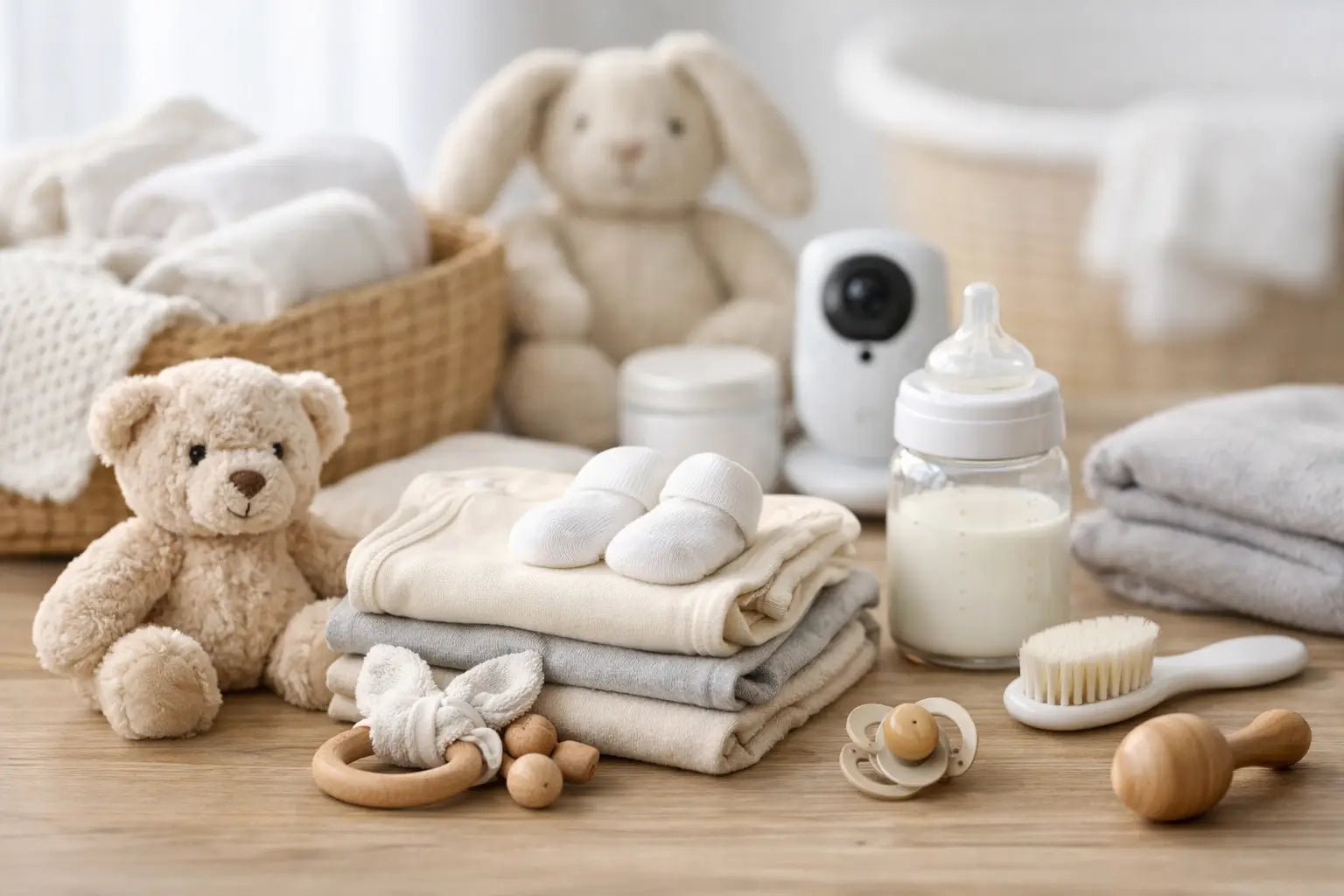
A baby essentials checklist can stop the last-minute panic buying that often happens before a new arrival. The aim is not to fill every cupboard with baby products. It is to have safe, useful basics ready for the first few weeks, then add items once you know what suits your baby, home and routine.
Newborns need less equipment than the adverts suggest. Start with the things used every day: a safe place to sleep, nappies and changing supplies, clothes that wash well, feeding equipment that matches your plans, and a safe way to travel home from hospital. Buying this way keeps costs manageable and leaves room for the items you genuinely find useful later.
Baby essentials checklist: start with everyday basics
Before buying, think about how often each item will be used, how quickly it can be washed and whether it has more than one purpose. A pram organiser may be handy, for example, but a changing mat, muslins and nappies will earn their place every day.
For a straightforward first shop, focus on these core groups:
- A cot, Moses basket or bedside crib with a firm, flat mattress and fitted sheets
- Newborn nappies, fragrance-free wipes or cotton wool, nappy sacks and barrier cream
- Babygrows, vests, socks, cardigans and a suitable outdoor layer for the season
- Muslin cloths, bibs and feeding supplies
- A rear-facing infant car seat if you will be travelling by car
- A pram or pushchair that works for your local journeys and storage space
- A baby bath or clean washing bowl, soft towels and mild baby wash
Sleep essentials: keep the sleeping space simple
A new baby needs a clear, safe sleeping arrangement from the first night. Choose a suitable cot, Moses basket or bedside crib with a firm, flat mattress that fits correctly. Keep spare fitted sheets nearby, as changes are common during the night.
For sleepwear, a small supply of babygrows and an appropriately sized baby sleeping bag can be more useful than buying piles of blankets. Follow current safe sleep guidance for your baby’s age and conditions. Avoid pillows, duvets, cot bumpers and soft toys in the sleep space. Items marketed as cosy or decorative are not always items a newborn needs.
Room temperature and laundry plans affect how much clothing you need. In cooler months, layers are practical because they can be added or removed more easily. In warmer weather, lighter cotton pieces are often enough. It is sensible to wash a modest starter wardrobe before the baby arrives, rather than removing labels from large bundles in sizes that may never fit at the right time.
Nappies, changing and bath time
Nappy changes are where practical supplies matter most. Start with one or two packs of newborn nappies rather than stocking up in bulk. Babies grow at different rates, and another size may be needed sooner than expected. Once you know the fit and your usual weekly usage, larger packs can offer better value.
A changing mat gives you a wipe-clean surface wherever you need it. Add gentle wipes or cotton wool, nappy sacks and a barrier cream. Keep a small changing kit downstairs as well as one near the sleeping area if your home has more than one floor. It saves repeated trips while holding a newborn.
Bath time does not require a cupboard full of products. A baby bath or clean washing bowl, two soft towels, clean flannels and a mild, suitable wash are a sensible start. Babies do not need daily baths, so choose simple products and replace them when needed instead of buying several bottles before you have used the first.
Feeding: buy for your plan, but leave flexibility
Feeding needs depend on whether you plan to breastfeed, formula feed, express milk or combine methods. It is fine to prepare for your preferred approach while keeping a little flexibility. A few muslins are useful whichever route you take, as are bibs, because spills happen often.
If breastfeeding, you may want breast pads and a comfortable feeding pillow, though a regular firm cushion may work at first. If formula feeding, you will need suitable bottles, teats, formula and a way to clean and sterilise feeding equipment. Buying a large bottle set before your baby arrives can be wasteful, as some babies prefer a particular teat shape or bottle style.
For expressing, a breast pump can be useful, but it does not have to be an immediate purchase for every family. Consider your return-to-work plans, feeding goals and available support. A small number of bottles and storage containers is often a more cautious starting point than a full feeding station.
Clothes: choose washable layers, not novelty outfits
Baby clothes are easy to overbuy, especially tiny outfits that are hard to resist. For the first months, soft, washable basics are usually the best value. Look for vests and babygrows with easy poppers or zip openings that make nappy changes less fiddly, particularly at night.
A practical newborn wardrobe might include enough vests and babygrows for several changes between washes, plus a couple of cardigans, socks and a hat for outdoor weather. Add mittens only if needed, as many babygrows have fold-over cuffs. Keep an eye on the season: a lightweight sun hat is different from a warm winter hat, and bulky coats should not be worn under a car seat harness.
It is worth buying a few items in the next size up. Newborn sizes can be short-lived, and having larger basics washed and ready means one less job during a busy week.
Getting out and about
Your travel choices should suit your actual routine, not just a showroom display. A pram or pushchair may be essential for daily walks, but check the folded size if boot space or hallway storage is limited. If you use public transport, weight, one-hand folding and kerb handling may matter more than extra accessories.
For car travel, use a rear-facing infant car seat that is suitable for your baby and fitted according to the manufacturer’s instructions. Check that it works with your vehicle before relying on it for the journey home. A blanket for use after the harness is secured can be useful in cold weather, whereas thick padded clothing can affect the fit of the harness.
A changing bag need not be expensive. Any roomy, easy-clean bag with space for nappies, wipes, a spare babygrow, muslins and a bottle if required can do the job. Pack it the night before appointments so you are not searching for essentials as you leave.
Useful items that can wait
Some products become valuable later, but are not urgent before birth. High chairs are for when your baby is ready for weaning. Baby monitors can make sense in larger homes, while a small flat may not need one straight away. A bouncer, play gym or white-noise machine may be a favourite in one household and barely used in another.
The same applies to large nappy bins, bottle warmers, designer changing bags and matching nursery furniture. Buy them because they solve a problem in your home, not because they appear on every shopping list. This approach is kinder to your budget and reduces clutter.
Make your first shop work harder
Set a budget for essentials, then separate it from optional extras. Compare pack sizes rather than just ticket prices, but do not buy huge quantities of items your baby may outgrow or dislike. Everyday supplies such as nappies, wipes, cotton wool and laundry products are easier to top up once you know your household rhythm.
It can also help to group purchases by when they are needed. Have sleep, changing, clothes and travel ready before birth. Keep feeding purchases appropriate to your plan, then wait on entertainment, nursery décor and specialist gadgets. Honesty Sales is designed for practical household shopping, so parents can add routine baby supplies alongside the everyday groceries and home essentials they already need.
A well-planned first basket is not the biggest one. It is the one that lets you bring your baby home with the basics covered, gives you time to learn what works, and keeps future purchases focused on real life rather than guesswork.

