
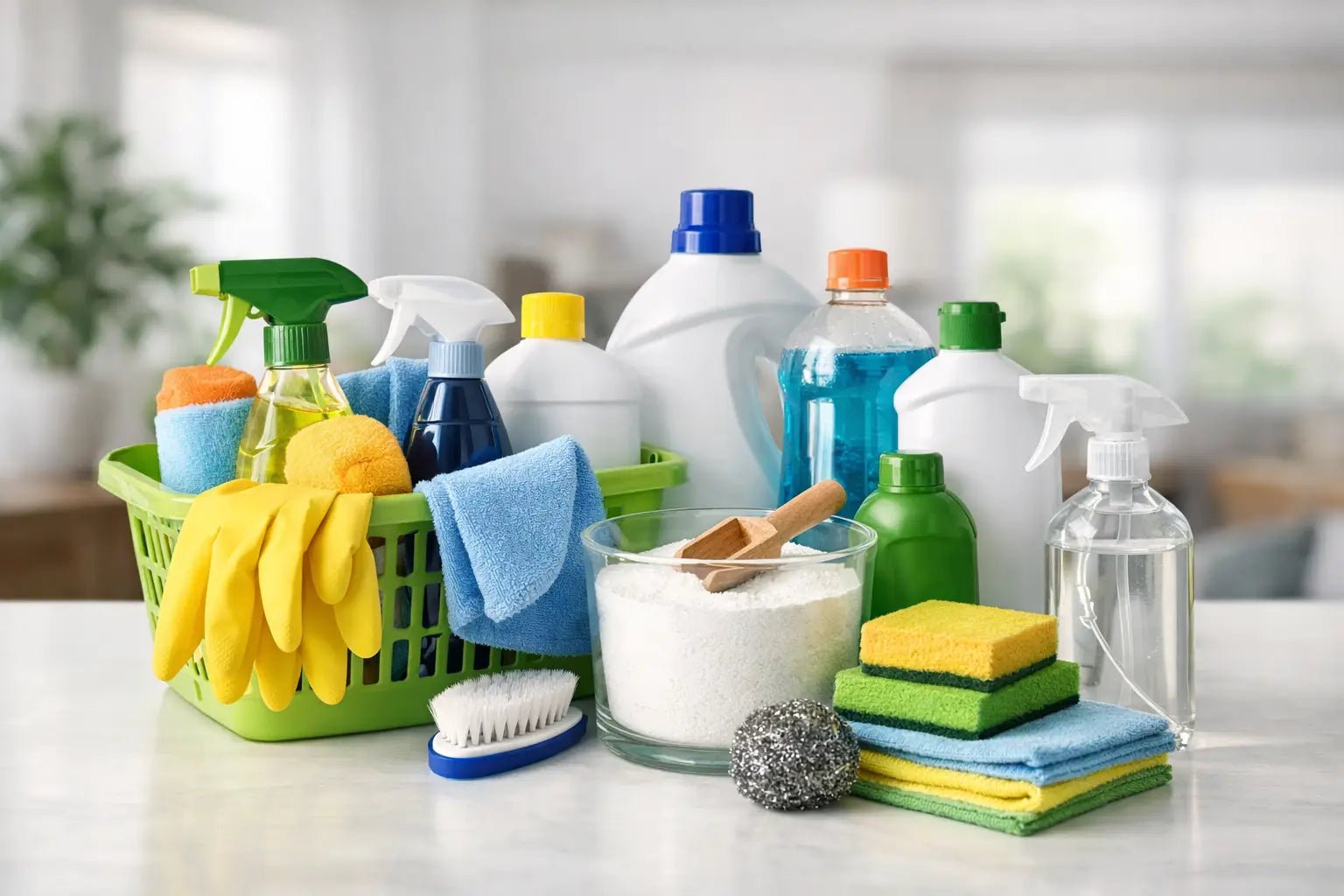
A cleaning cupboard is most useful when it deals with the messes that actually happen in your home: tea splashes on the worktop, muddy shoes in the hall, bathroom limescale and the weekly wash. Knowing how to stock household cleaning supplies is not about buying every spray on the shelf. It is about keeping a sensible, affordable selection ready, so a small job never turns into an urgent shop.
For most households, a reliable basic kit costs less over time than repeatedly buying single-use products for every surface. Choose products that suit your home, use them as directed and replace them before you run out.
Start with the jobs, not the brands
Before filling a basket, think through the rooms you clean most often and the surfaces in them. A family home with carpets, pets and young children will need a different mix from a small flat with hard floors. If you live in a hard-water area, bathroom and kitchen limescale products may be worth prioritising. If you have sensitive skin, fragrance-free options and gloves can make routine cleaning more comfortable.
A good starting point is to cover five everyday jobs: wiping surfaces, cleaning bathrooms, washing dishes, doing laundry and tackling floors. This keeps your cupboard practical without paying for several products that do much the same thing.
The aim is not to own the largest collection. It is to have one suitable product for each regular task, plus a few low-cost basics for spills and unexpected mess.
Your essential household cleaning supplies list
A versatile household stock should include the following items. Buy the pack size that makes sense for your available storage and how quickly your household gets through it.
- All-purpose cleaner for sealed worktops, tables, cupboard fronts and other everyday wipe-downs.
- Washing-up liquid, a washing-up brush or sponge, and dishwasher tablets if you use a dishwasher.
- Bathroom cleaner or limescale remover, toilet cleaner and a separate toilet brush.
- Laundry detergent, stain remover if needed, and fabric conditioner only if you regularly use it.
- Floor cleaner suited to your flooring, plus a mop, bucket, broom or vacuum bags where applicable.
- Microfibre cloths, kitchen roll, reusable sponges, rubber gloves and bin bags.
- Disinfectant for areas where hygiene matters, such as toilets, bins and food-preparation surfaces.
You may also want a cream cleaner for sinks and hobs, glass cleaner for mirrors, drain cleaner for occasional blockages, or carpet and upholstery cleaner. These are useful additions, but only buy them if they solve a recurring problem in your home. A specialist product that sits untouched for two years is not a saving.
How to stock household cleaning supplies room by room
Kitchen and food areas
The kitchen needs products that can handle grease, food spills and daily washing up. Keep washing-up liquid, surface cleaner, cloths, sponges and kitchen roll within easy reach. A bin bag refill is also worth keeping on hand, especially in busy households.
For hobs, ovens and stubborn grease, check that your chosen cleaner is suitable for the surface. Strong cleaners can be effective, but they are not always right for delicate finishes, natural stone or non-stick coatings. Wiping spills promptly with an all-purpose cleaner is often cheaper and easier than relying on heavy-duty products later.
Bathroom and toilet
Bathrooms benefit from regular light cleaning rather than occasional intensive scrubbing. Stock toilet cleaner, bathroom cleaner, cloths or sponges reserved for the bathroom, and a limescale remover if taps, shower screens or tiles need it.
Bleach-based products can be useful for some toilet-cleaning jobs, but they are not a replacement for every bathroom cleaner. Never mix bleach with other cleaning products, especially descalers, toilet cleaners or products containing ammonia. Use good ventilation and follow the label instructions carefully.
Laundry and bedrooms
Laundry supplies can become expensive when several boosters, scent products and specialist treatments are bought without a clear need. Start with a detergent that works for your household and water type. Add a stain remover if school uniforms, workwear, baby clothes or sports kit regularly need extra help.
Keep a small supply of stain treatment near the laundry area, so marks can be dealt with before they set. Check garment care labels first, particularly for wool, dark colours and delicate fabrics. For bedrooms, a vacuum or brush, dusting cloth and occasional mattress or upholstery cleaner are normally enough.
Floors, hallways and pet areas
Floors pick up the most visible dirt, so make this part of your stock easy to reach. Choose a floor cleaner that suits tile, vinyl, laminate, sealed wood or stone. Some flooring only needs warm water and a lightly damp mop, while others need a specific product. Too much water can damage laminate and wood flooring.
Homes with pets may need extra bin bags, odour remover, lint rollers and a dedicated pet-safe cleaner. Check labels before using products around animals, and keep pets away until treated areas are dry where instructed.
Buy smart: where value really comes from
Low prices matter, but the lowest shelf price is not always the best value. Compare the size of the bottle, number of washes or number of bin bags in each pack. Larger packs can reduce the cost per use, but only when you have room to store them and will use them before they deteriorate.
Concentrated detergents and refill packs can be a sensible choice because they often take up less space and reduce repeat packaging. On the other hand, a large bulk purchase is not ideal if you are trying a product for the first time, have limited cupboard space or need to carry it up several flights of stairs.
For routine products you know you use, keeping one unopened backup can prevent last-minute purchases at a higher price. This works well for washing-up liquid, laundry detergent, toilet roll, dishwasher tablets and bin bags. There is usually no need to keep multiple backups of every cleaner.
Shopping for household essentials alongside groceries, toiletries and other everyday items can also make the weekly shop simpler. Honesty Sales offers a broad range of practical home essentials, helping value-focused households keep routine items together in one order.
Store products safely and make them last
Keep cleaning supplies in a cool, dry place, away from direct sunlight and food. Store them in their original containers with labels visible, and keep lids tightly closed. Never decant chemicals into drink bottles or unlabelled containers, as this creates an avoidable safety risk.
If children or pets are in the home, use a high or locked cupboard where possible. Laundry capsules should be kept in their original packaging and out of reach. Gloves are useful when using stronger products or if your skin is prone to irritation.
Check labels for expiry dates, dilution guidance and surface restrictions. Using more product than recommended rarely gives a better result. It can leave residue, waste money and, in the case of floor products, make surfaces slippery.
Set a simple restocking routine
The easiest way to avoid an overfilled cupboard is to check supplies before your regular shop. A quick look at the kitchen sink, bathroom, laundry area and bin cupboard is enough. Add an item to your shopping list when you open the last one, rather than waiting until it is empty.
Review your cleaning cupboard every few months. Throw away damaged sponges, wash cloths, check spray nozzles and remove products you no longer use. If several bottles are half full, use those before buying more of the same type.
A well-stocked cleaning cupboard should make home care feel straightforward, not expensive or complicated. Keep the products you use, choose sensible pack sizes, and leave enough space for the next everyday job.

