
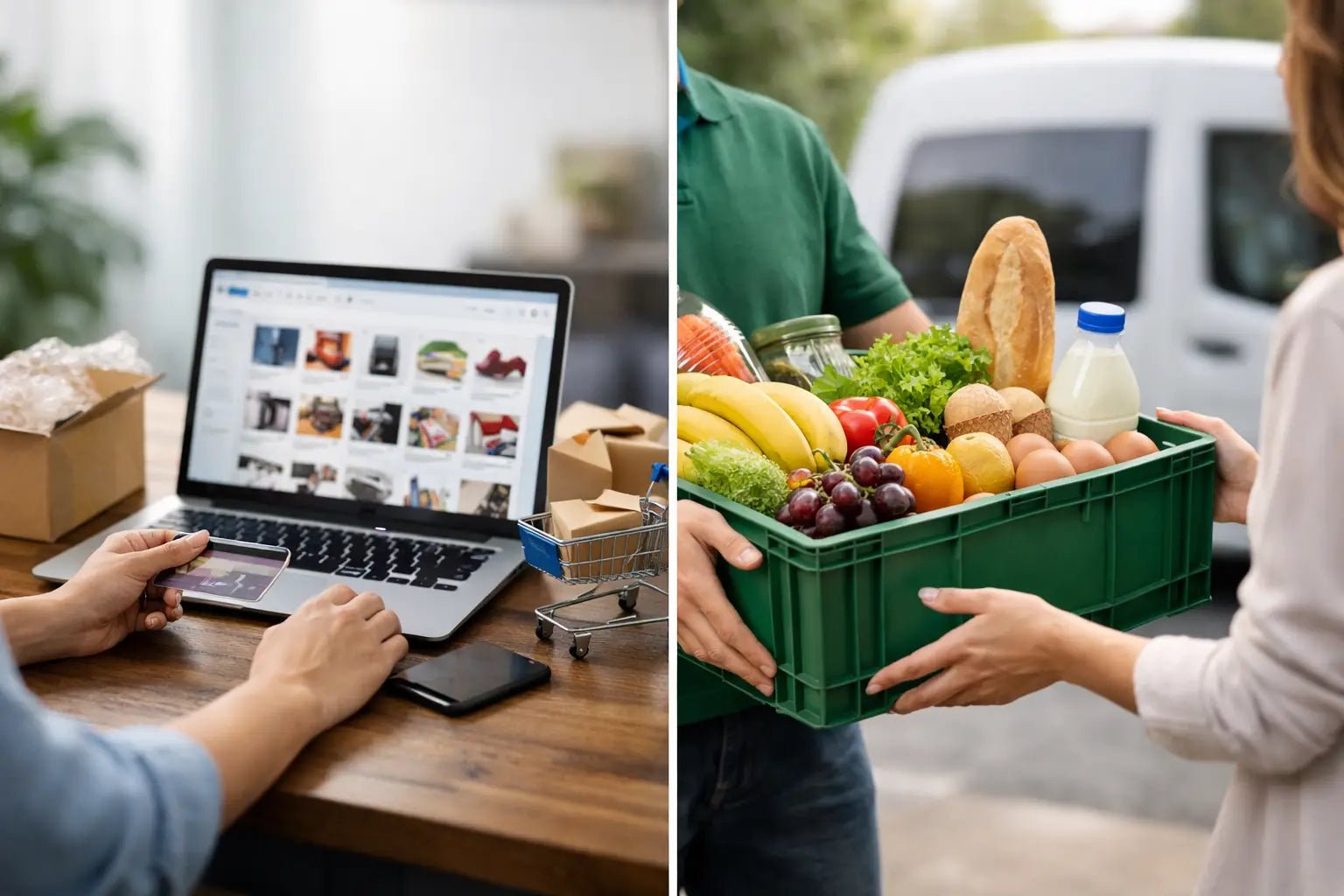
A weekly shop can look cheap until delivery charges, minimum spends and missing household items turn it into two or three separate orders. The choice between online marketplace versus supermarket delivery is not simply about where you buy food. It affects how much choice you have, how easily you can compare prices and whether you can sort groceries, toiletries, pet supplies and practical home essentials in one basket.
Supermarket delivery works well for many households, particularly when you want a familiar food shop delivered in a chosen slot. An online marketplace can make more sense when value, wider choice and combining different types of everyday purchases matter most. The right option depends on what is in your basket and how you prefer to shop.
Online Marketplace Versus Supermarket Delivery: The Main Difference
A supermarket delivery service is usually built around one retailer's stores, own-brand ranges and grocery supply chain. You choose items from that supermarket, book a slot and receive the order from a local shop or fulfilment centre. It is a straightforward model, especially for a regular grocery list.
An online marketplace brings together a broader range of departments in one place. Alongside pantry food, fresh groceries and frozen items, you may be able to buy cleaning products, personal care, baby essentials, clothing, electronics, office supplies, pet care and workwear. Some products may come directly from the retailer, while others may be offered through approved sellers.
That wider range is the practical difference. If you only need bread, milk and tonight's dinner, a supermarket slot may be all you need. If you are also replacing washing-up liquid, buying nappies, ordering dog food and picking up a phone charger, one broader order can save time and reduce the need to shop around.
Price: Look Beyond the First Total
Price-conscious shoppers should compare more than the headline cost of a basket. Supermarkets often run strong offers on selected lines, loyalty pricing and own-brand basics. These can be good value, but the saving may depend on joining a scheme, meeting a spending threshold or buying a specific pack size.
Marketplaces can be useful for comparing brands, pack sizes and categories without being limited to one supermarket's range. Discount-led pricing is particularly helpful on cupboard staples, household goods, toiletries and larger packs that are bought regularly. A larger catalogue also makes it easier to add items you would otherwise need to buy elsewhere.
Always check the unit price where it is shown. A bigger pack is not automatically better value if it will go unused, and a low item price can lose its appeal if delivery costs are high. Check for minimum order values, service charges and any exclusions before you pay.
Free shipping can make a meaningful difference to routine shopping, especially when you are buying several categories at once. At Honesty Sales, the focus is on low prices across everyday essentials alongside free shipping, delivery reassurance and straightforward support if there is a problem with an order. For a household watching every pound, fewer separate delivery charges can be as useful as a discount on one item.
Choice and Convenience for a Full Household Shop
Supermarkets are designed first for food shopping. Their websites are generally easy to use when you already know what you want and tend to buy the same brands each week. Saved favourites, previous orders and meal-based browsing can make a repeat grocery shop quick.
A marketplace is better suited to a mixed shopping list. Instead of making a food order, then visiting another retailer for batteries, a third for baby wipes and another for workwear, you can search across departments from one account. This is especially useful for busy families, carers, small offices and anyone stocking up for the month.
The trade-off is that more choice requires a little more checking. Similar products can have different sizes, sellers, delivery estimates or specifications. Read the product title carefully, confirm quantities and check whether an item is suitable for your needs. For electrical items, clothing and business supplies, dimensions, compatibility and sizing matter just as much as price.
A good approach is to keep a running essentials list. Add items as they run low, then place an order when it makes financial sense rather than making repeated small purchases. This can help reduce impulse buys and make delivery costs easier to manage.
Fresh and Frozen Groceries Need Different Checks
Freshness is often the biggest concern when comparing marketplace shopping with supermarket delivery. Supermarket services are set up for chilled and fresh food, often offering substitutions when a chosen item is unavailable. That can be convenient, but it can also mean receiving a different brand, size or product than the one you selected.
When ordering fresh food online, check the product description, expected delivery date and the retailer's handling arrangements. If substitutions are offered, choose whether you are happy to accept them. A replacement can be helpful for standard items such as onions or yoghurt, but less useful where dietary needs, brand preferences or a planned recipe are involved.
Frozen goods need reliable packing and prompt delivery. Plan to be available when the order arrives and make room in the freezer before placing a large order. If an item arrives damaged, missing or unsuitable, photograph the issue where appropriate and contact customer support promptly. A clear delivery guarantee and refund policy provide extra reassurance, but it is still sensible to inspect fresh and frozen items as soon as they arrive.
Delivery Speed, Slots and Flexibility
Supermarket delivery often has the advantage when you need groceries at a precise time. You can usually select a slot, which is helpful for weekly meal planning or when somebody needs to be at home. The downside is that popular evening and weekend slots may cost more or be unavailable at short notice.
Marketplace delivery can suit shoppers who are comfortable with a delivery window rather than an exact hour. This can be a good fit for planned stock-ups, non-urgent household goods and larger mixed baskets. Delivery times may vary by product or seller, so check the expected arrival details before completing the order.
Neither model is automatically faster in every situation. A supermarket may be better for tomorrow's dinner. A marketplace may be better for a planned order that covers food, cleaning, health and beauty, and other essentials without several separate checkouts.
Which Option Fits Your Shopping Routine?
Choose supermarket delivery when your priority is a familiar weekly food shop, a selected time slot and quick access to fresh items from one retailer. It is a strong option for shoppers who use the same core brands and do not need many non-food products at the same time.
Choose an online marketplace when you want to compare a wider range, buy across several departments and look for value on everyday goods. It is particularly practical for bulk household purchases, family essentials, pet care, personal care products and the useful items that do not always fit into a standard supermarket basket.
Many households will use both. A small supermarket order may cover urgent fresh food, while a marketplace order handles the wider monthly shop. There is no rule saying every purchase must come from one place.
Before you check out, compare the final basket total, not just individual prices. Check quantities, delivery terms, estimated arrival dates and the returns or refund process. The best choice is the one that gets the essentials you actually need to your door at a price that works for your household. A well-planned basket leaves more room in the budget for the things that matter beyond the weekly shop.

