
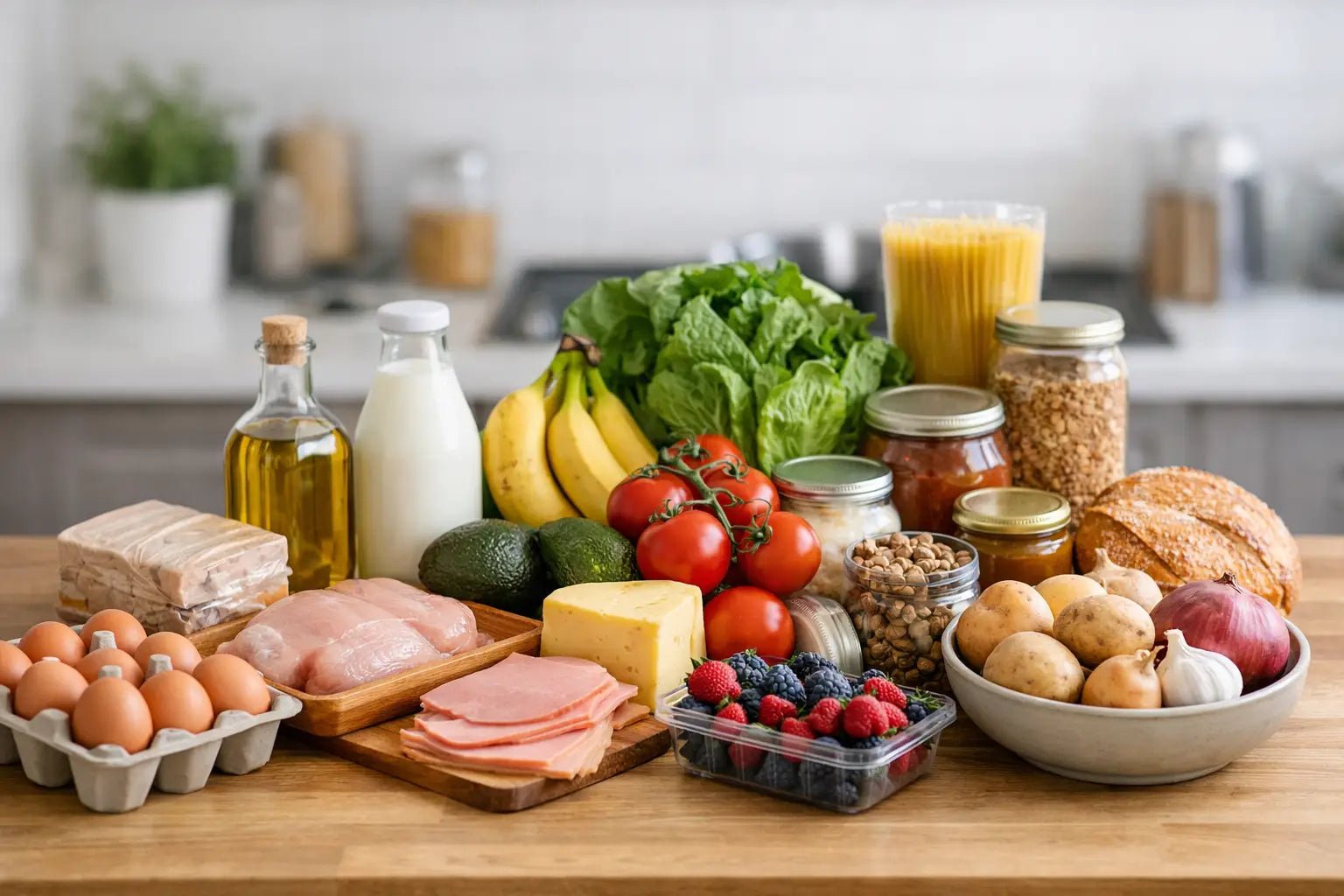
Running out of milk is annoying. Running out of the basics for three dinners in a row is expensive. If you are asking what groceries should always be stocked, the aim is simple - keep enough on hand to cover everyday meals, lunchbox fillers, snacks and a few last-minute changes of plan without overspending.
A well-stocked kitchen is not about buying everything at once. It is about keeping the right mix of cupboard staples, chilled essentials and freezer back-ups so you can cook something useful even when the week gets busy. For most households, that means focusing on affordable items with a decent shelf life, flexible ingredients and products that work across more than one meal.
What groceries should always be stocked in most homes
The best grocery staples are the ones you actually use. There is no point filling a cupboard with lentils if your household never eats them, or buying premium sauces when a basic tin of tomatoes does more work for less money. A sensible stock-up should cover breakfasts, easy dinners, packed lunches, hot drinks and a few household fallback options for the days when you cannot get to the shops.
Start with carbohydrates that stretch meals further. Bread, wraps, pasta, rice, noodles and potatoes give you options across the week. Bread and wraps are useful for toast, sandwiches and quick lunches, while rice and pasta help turn small amounts of meat, vegetables or sauce into a proper meal. Potatoes earn their place because they are filling, versatile and often one of the best-value fresh foods you can buy.
Protein matters too, but this is where cost and convenience need balancing. Eggs are one of the smartest staples because they work for breakfast, lunch and dinner. Tinned beans, chickpeas and lentils are affordable, keep well and help bulk out soups, curries and pasta dishes. If your household eats meat or fish regularly, having a few frozen portions, fish fingers, mince, sausages or tinned tuna in reserve makes meal planning much easier.
Then there are the ingredients that stop meals feeling repetitive. Tinned tomatoes, passata, stock cubes, cooking oil, chopped onions, garlic, herbs, curry powder, gravy granules and a few everyday sauces go a long way. You do not need a huge spice rack to cook decent food. You need the basics that help you turn plain ingredients into something your household will actually want to eat.
The cupboard staples that save the most money
Cupboards do the heavy lifting in a value-focused kitchen. They hold the products with the longest shelf life, they are easy to top up during a routine shop, and they give you a safety net when fresh food runs low.
Pasta, rice and noodles are obvious choices because they are cheap per portion and easy to store. Breakfast cereal and porridge are also worth keeping in, especially for families trying to keep mornings simple. Flour, sugar and baking basics can be useful if you cook from scratch, but they are not essential for every home. If you rarely bake, you are better off spending that budget on foods you know will be used.
Tinned foods deserve more credit than they often get. Baked beans, chopped tomatoes, sweetcorn, tuna, soup and pulses are practical, low-fuss and often better value than buying fresh ingredients that end up being wasted. They are especially useful in homes where shopping is done weekly or less often.
Snacks can be part of a smart stock-up too, as long as they are chosen with a bit of discipline. Crackers, biscuits, cereal bars and peanut butter can help fill lunchboxes and cover hungry moments between meals. The trade-off is that snack foods are easy to overspend on, so it helps to keep a few reliable options rather than buying every offer that appears.
Chilled groceries worth keeping in regularly
Chilled food has a shorter window, so this is where planning matters more. The aim is not to overfill the fridge. It is to keep enough fresh basics to support quick meals and everyday use.
Milk is an obvious one for tea, coffee, cereal and cooking. Butter or spread, cheese and yoghurt are also worth regular consideration because they work across snacks, lunches and simple dinners. Eggs belong in this group for many shoppers too, even though storage habits vary.
Fresh vegetables should be chosen with shelf life in mind. Carrots, onions, cabbage, peppers and cucumbers tend to be more practical than delicate salad leaves if you want food to last through the week. Fruit works the same way. Bananas are handy, but apples, oranges and pears often give you a longer window before anything spoils.
If your budget is tight, it is sensible to buy chilled food with a plan for how it will be used. Cheese for sandwiches can also go in pasta bakes. Yoghurt can cover breakfasts and snacks. Milk should match how much your household actually drinks, not how much you think you ought to keep in.
Freezer groceries that make busy weeks easier
A freezer should not just be a storage space for random leftovers and one old bag of peas. It can be one of the most cost-effective parts of your kitchen if you use it properly.
Frozen vegetables are a strong buy because they reduce waste and can be used in exactly the quantity you need. Peas, mixed vegetables, broccoli and sweetcorn are especially useful. Frozen fruit can also make sense for smoothies, porridge or desserts without the pressure to use it immediately.
For meals, a few dependable freezer items can save both time and money. Chips, frozen chicken, mince, sausages, fish portions, pizzas or ready meals all have a place depending on your budget, schedule and household habits. There is no single right answer here. A family with children may prioritise quick tea-time options, while a couple cooking from scratch might prefer frozen vegetables, meat portions and homemade leftovers.
Bread is another freezer staple that gets overlooked. Freezing spare loaves, rolls or wraps can stop waste and help avoid unnecessary top-up shops, which is often where extra spending happens.
How to decide what groceries should always be stocked for your household
The answer to what groceries should always be stocked depends on who you are buying for. A single adult, a larger family, a parent shopping for baby items and a household with dietary restrictions will all need something slightly different. The right stock list is not the biggest one. It is the one that covers your real routine.
A practical way to work this out is to think in meal categories rather than individual products. What do you need for breakfast most days? What do people take for lunch? Which five or six dinners come up again and again? Once you know that, the repeat-buy groceries become clear.
It also helps to split groceries into three groups: always keep in, buy if low, and only buy when needed. Rice, pasta, tinned tomatoes and tea bags may be your always-keep items. Fresh berries or speciality sauces might sit firmly in the only-when-needed group. This keeps the weekly shop more focused and cuts down on waste.
Price matters, but so does use. Buying a giant pack is only good value if it gets eaten. For some homes, smaller packs are the more sensible choice because they protect the budget from waste.
Avoiding the usual stocking mistakes
The most common mistake is buying with good intentions instead of realistic habits. That is how people end up with cupboards full of ingredients for meals they never make and fridges full of fresh food with two days left on the date.
Another mistake is stocking only ingredients and no convenience items. It sounds sensible in theory to buy everything for cooking from scratch, but busy households usually need a mix. A good grocery shop often includes both basics and back-ups. Pasta and rice are useful, but so are a few easy meals for the nights when plans change.
It is also easy to forget non-food essentials that sit alongside grocery shopping. Washing-up liquid, toilet roll, laundry products, nappies, pet food and toiletries can derail a budget fast when they are bought in a panic. Keeping these routine basics in step with the food shop saves time and usually leads to better value choices.
A reliable stock-up does not need to look impressive. It just needs to work. Keep the foods your household reaches for every week, add freezer and cupboard back-ups that prevent waste, and top up before you run completely out. If your kitchen can handle breakfast, packed lunches and a last-minute dinner without a stressful extra shop, you are doing it right.

