
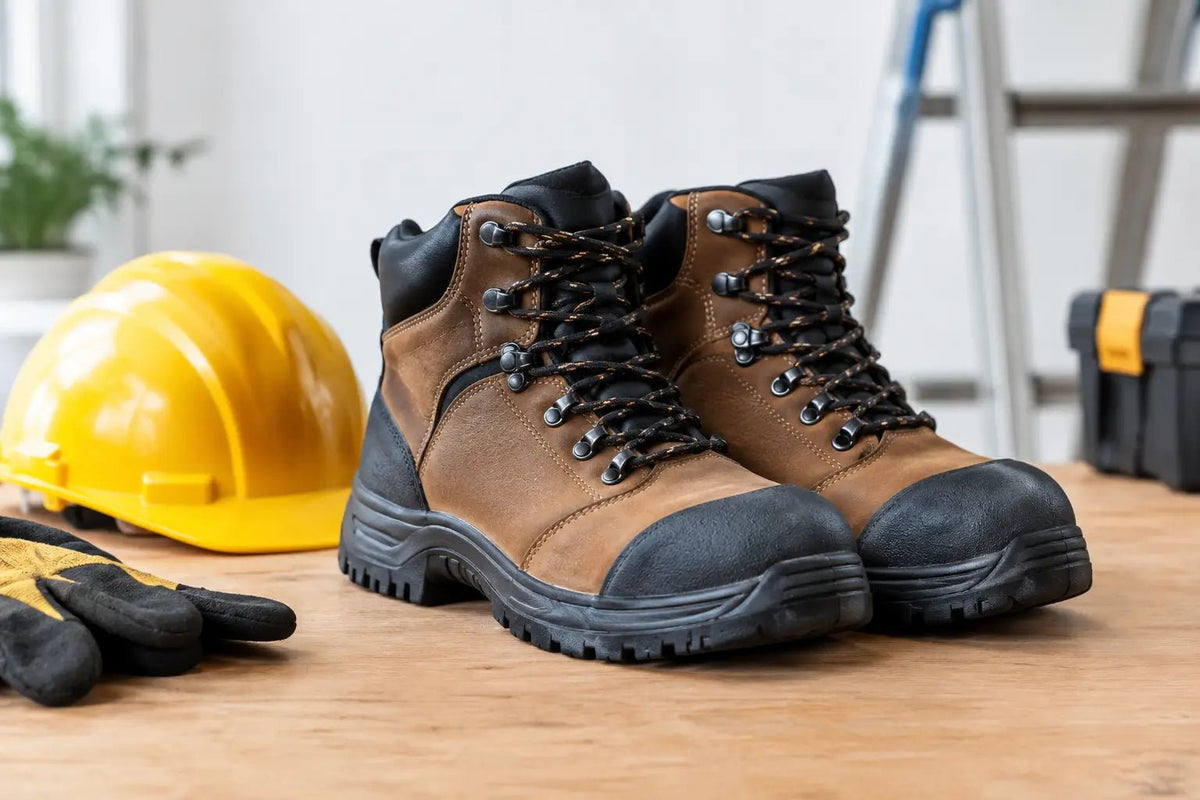
A pair of boots can look like a bargain until the first wet shift, long walk across a yard or dropped tool tests them properly. This budget safety boots review focuses on what practical UK workers and household buyers should expect from lower-priced work boots: essential protection, reasonable comfort and honest value without paying for features they may never use.
Cheap does not automatically mean unsuitable. For light trade work, warehouse roles, deliveries, gardening, DIY and general site tasks, a sensibly priced safety boot can be the right purchase. The key is matching the boot to the job, rather than choosing solely by the lowest price on the page.
What budget safety boots should deliver
At a minimum, safety footwear should protect your toes, stay secure underfoot and hold up to normal daily use. Look for a clearly stated safety rating, usually EN ISO 20345, rather than assuming that a heavy-looking boot is protective. This standard covers footwear with a protective toe cap designed to withstand impact and compression tests.
Many affordable boots are sold with an S1, S1P or S3-style classification. The details matter. S1 footwear generally adds closed heel protection, antistatic properties, energy absorption at the heel and fuel-oil resistance. S1P adds a penetration-resistant midsole. S3 commonly adds water-resistant upper protection and a more suitable outsole for wet ground.
For indoor warehouse work, stock handling or dry workshops, an S1 or S1P boot may offer all the protection needed. For outdoor labour, building sites, landscaping or regular work in rain and mud, paying a little more for water resistance and deeper tread can save discomfort later. Always follow your employer's footwear rules where these apply.
Budget safety boots review: the real trade-offs
Lower prices normally come from simpler materials, fewer comfort layers and less specialist design. That is not a criticism. It is simply where the saving is made, and it helps buyers decide what is worth paying for.
Protection can still be dependable
Steel toe caps remain common in value safety boots. They are proven, widely available and often help keep the cost down. They can feel heavier than composite toe caps, but for many people the difference is manageable over a standard shift.
Composite toe caps are lighter and do not conduct cold in the same way as steel. They are useful for workers who spend a lot of time walking, work around security scanners or need non-metallic footwear. However, these boots often cost more. If your work is mainly lifting, loading or moving around a dry workplace, steel-toe boots can offer excellent value.
The same applies to midsoles. A steel or textile penetration-resistant layer is particularly useful where screws, nails, pallet splinters or sharp waste may be underfoot. It is less essential for an office-based delivery role or clean retail stockroom, but it should not be skipped where puncture hazards are present.
Comfort is where inexpensive pairs vary most
A budget boot can meet the required standard and still feel wrong after several hours. Stiff uppers, thin insoles and limited ankle padding are the most common compromises. That does not mean every affordable pair is uncomfortable, but it does mean fit deserves more attention than the product photo.
Choose your normal size as a starting point, then allow room for work socks and natural foot swelling over a long day. Your toes should not touch the front of the cap when walking downhill or kneeling. The heel should stay in place without rubbing, while the laces should hold the foot securely without pressure across the top.
If you are between sizes, read the sizing information carefully and consider how you will use the boots. Thick thermal socks may justify extra room in winter. A loose fit is not a solution for a wide foot, though. Look for wide-fit options where available, as excess length can cause blisters and reduce stability.
A removable insole is a useful feature even on lower-priced footwear. It makes the boots easier to air, and it gives you the option to replace the insole if you need more cushioning or arch support. This small change can extend the useful life of a pair that is otherwise in good condition.
Grip matters more than appearance
A chunky sole may look ready for any site, but tread pattern and rubber quality have more to do with real grip. Check whether the outsole is described as slip-resistant and whether it suits the surface you work on. Smooth concrete, wet paving, oily workshop floors and muddy ground all place different demands on a sole.
For general work, look for defined lugs with spaces between them so mud can clear as you walk. For warehouses and indoor workplaces, a flatter slip-resistant sole can feel steadier and pick up less debris. No boot is slip-proof, especially on oil, ice or loose gravel, so safe walking habits still matter.
Where budget boots make the most sense
Value safety boots are a sensible choice when the risk level is clear and the role does not demand highly specialised footwear. They can work well for occasional DIY, property maintenance, gardening, warehouse picking, light manufacturing, deliveries and visitors who need compliant protection for short periods.
They can also be a practical option for employers buying several pairs for a small team. Keeping costs under control matters, but the right purchase is the pair that people will actually wear throughout a shift. A cheaper boot that causes pain after two hours is poor value, even if it meets the basic standard.
More demanding roles may justify a higher spend. Regular construction work, roofing, utility work, heavy engineering, cold stores and jobs involving prolonged outdoor exposure often need stronger waterproofing, better insulation, higher ankle support or specific resistance ratings. In those cases, think of the extra cost as equipment for the conditions, not a brand upgrade.
How to compare pairs before buying
Start with the hazards, not the colour or style. Ask whether you need toe protection only, a puncture-resistant midsole, water resistance, electrical properties, heat resistance or a non-metallic design. Once you know this, comparisons become much simpler.
Then check the upper material. Leather is usually hard-wearing and can be treated for better weather resistance, though it needs occasional care. Synthetic materials can be lighter and easier to wipe clean, but their long-term durability differs between pairs. For damp outdoor work, inspect how the tongue joins the upper as well as the material itself. A wide opening around the tongue can let rain in quickly.
Pay attention to the fastening. Traditional laces allow a closer fit and are straightforward to replace. Side zips are convenient for getting boots on and off, but they should be backed by laces or a secure fastening system if the job involves a lot of movement. Check that eyelets, hooks and stitching look suitable for regular use.
Finally, compare the full value, not only the shelf price. A reasonably priced pair with clear safety information, a suitable return option and dependable delivery can be a better buy than a slightly cheaper pair with unclear specifications. At Honesty Sales, practical workwear is best approached like any everyday essential: buy what fits the job, avoid paying for unnecessary extras and keep the standard of protection clear.
Making a lower-priced pair last longer
Most premature wear comes from damp storage, dried mud and damaged laces rather than a single hard day at work. Brush off dirt after outdoor use, let boots dry naturally away from direct radiators and remove the insoles overnight when they are wet. Heat can crack some uppers and weaken adhesives.
Check the outsole, toe area and seams every few weeks. Replace boots when the tread is badly worn, the toe cap becomes exposed, the sole starts separating or water gets in through damaged material. A safety boot is not a good place to keep stretching the life of something that has stopped protecting you properly.
The best value is rarely the absolute cheapest pair. It is the pair with the right safety rating, a secure fit and enough comfort to get you through the work you actually do. Choose on those three points first, and a budget boot can earn its place by the door.

