
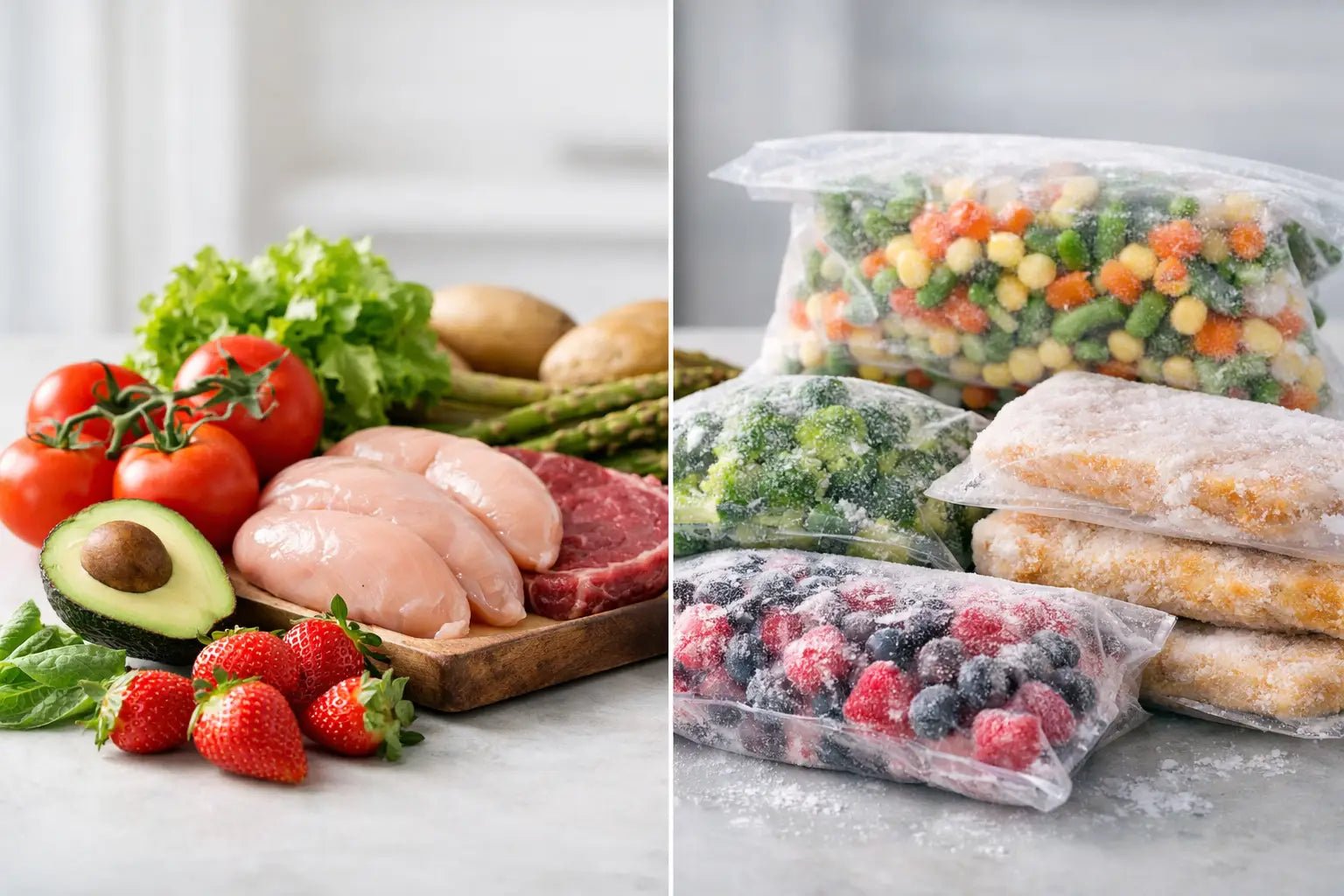
A bag of frozen peas that gets used over three meals often works out better value than a fresh pack that ends up limp in the fridge by Thursday. That is the real question behind fresh vs frozen food savings - not just what costs less on the shelf, but what saves more across the whole week.
For most households, there is no single winner. Fresh food can be cheaper when it is in season, on promotion, or needed for one planned meal. Frozen food often wins when you want longer shelf life, less waste, and better portion control. If you are trying to keep the grocery bill down without making shopping harder, the best approach is usually a mix of both.
What fresh vs frozen food savings really mean
A lower ticket price does not always mean better value. Fresh produce may look cheaper per pack, but if part of it goes in the bin, the true cost rises fast. Frozen food can seem dearer at first glance, yet it often lets you use exactly what you need and keep the rest for later.
That matters even more for busy households. If plans change, fresh food can spoil before it gets used. Frozen options give you more breathing room. You can keep vegetables, fruit, fish, chips, ready meals and meat in reserve without having to rush them into dinner just because the use-by date is close.
Savings also come from fewer top-up shops. When your freezer is stocked, you are less likely to make extra trips for missing ingredients, and those trips often lead to extra spending that was never in the plan.
Where frozen usually saves more
Frozen food tends to perform well in three areas: waste, convenience and consistency. These are not small wins. Over a month, they can make a noticeable difference.
Less waste means lower real cost
This is the biggest advantage. Frozen vegetables, fruit and proteins wait until you need them. You pour out a portion, use the rest later, and avoid throwing money away. For families, shift workers and anyone juggling school runs or irregular meal times, that flexibility can be worth more than a small price difference.
Think about spinach, berries or fish fillets. Fresh versions can be excellent, but they often have a short window. Frozen versions let you spread the cost over several meals. That is where fresh vs frozen food savings often tilt towards frozen.
Bulk buying is easier
Frozen food is often sold in larger packs, which can bring the price per kilo down. If you have freezer space, this can help you buy on value rather than on urgency. A larger bag of mixed vegetables or chicken portions may cost more upfront, but it can reduce your average meal cost.
There is a trade-off, though. Bigger packs only save money if they get used. If the freezer turns into a graveyard of half-open bags and mystery boxes, the savings disappear.
Quicker meals can stop expensive fallback choices
Convenience has a cash value. Keeping frozen basics at home can stop the last-minute takeaway or the extra spend on a convenience shop. A freezer stocked with vegetables, chips, fish fingers, mince or ready meals gives you affordable backup when the day runs away from you.
For households watching every pound, this matters. The cheapest meal is often the one you already have in the house.
Where fresh can still be the better buy
Frozen is strong on practicality, but fresh should not be written off. In many cases, fresh food is the smarter purchase.
Seasonal fresh produce can be cheaper
When fruit and veg are in season, fresh prices often improve. You may get better value, stronger flavour and more choice at the same time. If you know you will use it quickly, fresh can be the better buy on both quality and cost.
This is especially true for staples that are used fast in family cooking, such as carrots, onions, potatoes, peppers and salad items for packed lunches or evening meals.
Fresh works well for planned meals
If you shop with a clear meal plan, fresh ingredients can be cost-effective because they are bought with a purpose. A head of broccoli for tonight's dinner, mushrooms for tomorrow's pasta and apples for lunchboxes are less likely to be wasted when they already have a place in the week.
The risk comes when fresh food is bought with good intentions but no plan. That is often when it gets forgotten at the back of the fridge.
Some fresh items give better flexibility than expected
Not all fresh food is fragile. Root vegetables, apples, cabbage and hard cheeses can last well when stored properly. If you choose sturdy fresh items, you may get the lower cost of fresh without the same spoilage risk.
Fresh vs frozen food savings by category
The best value choice changes depending on what you are buying.
Frozen vegetables are often one of the strongest value options. Peas, sweetcorn, mixed veg, spinach and broccoli are easy to portion, long-lasting and usually dependable on price. For soups, curries, casseroles and sides, they are hard to beat.
Frozen fruit can be excellent value too, especially for smoothies, porridge, yoghurt and baking. Fresh berries in particular can be expensive and spoil quickly, so frozen often makes better financial sense.
With meat and fish, frozen can help with portion control and storage. Buying frozen fillets, burgers, sausages or chicken pieces can prevent waste and spread cost over more meals. Fresh can still be worthwhile if it is reduced, used that day, or bought in a family pack you can freeze at home.
Potatoes, onions and carrots are usually good fresh buys because they keep reasonably well and are often low-cost. Salad leaves, herbs and soft fruit are where many shoppers lose money, because they can spoil before they are finished.
Prepared food is more mixed. Frozen ready meals, pizzas and oven foods can save money compared with takeaways, but they are not always cheaper than cooking from scratch. The saving is strongest when they replace a more expensive fallback choice.
How to shop smarter for real savings
A practical weekly shop usually works best when fresh and frozen support each other. Buy fresh for meals you know you will cook in the next few days. Buy frozen for backup, batch cooking and ingredients you use little and often.
It helps to look at price per weight rather than pack price alone. A cheap fresh punnet that goes off before it is eaten is not a bargain. A larger frozen bag that covers several meals may be better value, even if the upfront spend is higher.
Storage matters too. If your fridge runs too warm or your freezer is packed so tightly that food gets forgotten, your savings will suffer. A simple check of what you already have before shopping can stop duplicate buying.
Households with children often save more from frozen staples because meal plans can change quickly. Smaller households may benefit from frozen because it is harder to get through large fresh packs in time. Larger families may save with fresh basics used quickly in volume, while keeping frozen items on hand for flexibility.
If you shop online, comparing categories in one place can make this easier. You can weigh up frozen family packs, pantry items and fresh essentials side by side, instead of making rushed decisions in-store. That kind of straightforward value shopping is where retailers like Honesty Sales can help households keep routine spending under control.
The hidden costs people forget
When comparing fresh and frozen, many shoppers focus only on the shelf label. But energy use, travel, time and waste all affect the final picture.
A freezer costs money to run, but frequent emergency trips to the shop can cost more. Fresh food may support quicker lunches and salads, but if it gets thrown away every week, that is money gone. Frozen food may need more storage space, but it can reduce stress and give you more meal security.
There is also the question of how your household actually eats. If you enjoy cooking from scratch most nights and use ingredients promptly, fresh may offer very good value. If your routine is less predictable, frozen usually gives better protection against waste.
The smartest answer is rarely all fresh or all frozen. It is choosing the format that fits the item, your schedule and your budget.
A good shop is not about buying everything at the lowest sticker price. It is about buying food that gets used, feeds the household well, and does not leave you spending more later to fix avoidable gaps.

