
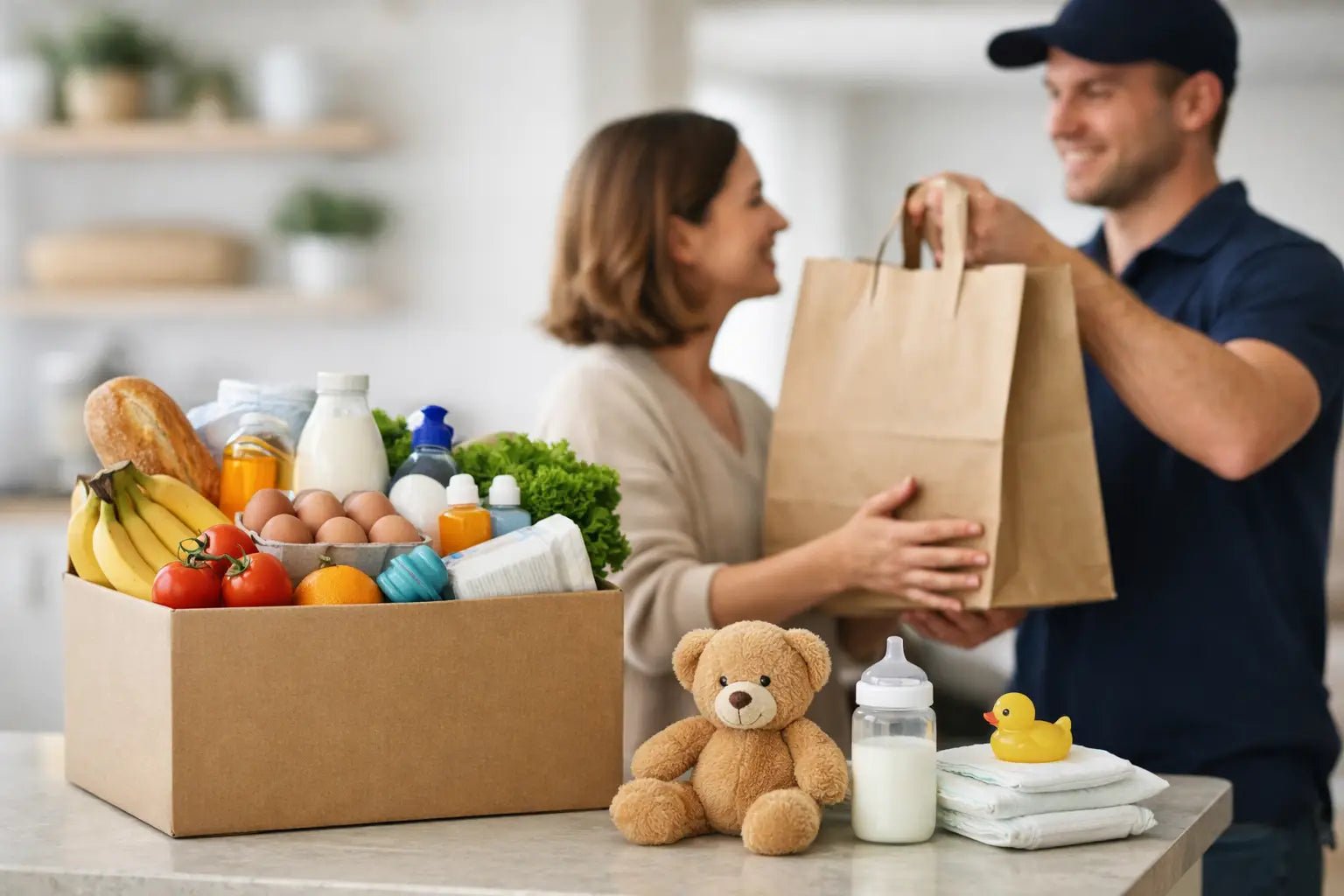
Running out of nappies at 9pm, realising the pasta sauce is gone halfway through tea, or spotting that the loo roll cupboard is down to one last pack - this is exactly why a guide to family essentials delivery matters. For busy households, getting everyday basics delivered is not just about convenience. It is a practical way to stay stocked, avoid extra shop trips and keep spending under control when prices are under pressure.
Why a guide to family essentials delivery helps real households
Most families do not overspend because they buy luxury items. They overspend because they shop in a rush, forget what is already in the cupboard, and make extra top-up orders for things that should have been planned earlier. Delivery can solve that, but only if you use it well.
A good family essentials delivery routine cuts out panic buying. It also makes it easier to compare prices, check sizes, and buy across several household needs in one basket. That matters when you are shopping for groceries, cleaning products, toiletries, baby items and pet care all at once.
There is a balance to strike, though. Delivery is most useful when it saves time and prevents waste. If you place too many small orders or buy only because an item looks like a bargain, costs can creep up. The smartest approach is simple, regular and based on what your household actually uses.
Start with the essentials your family gets through every week
Before you think about deals, start with volume. Which items disappear fastest in your home? For some households, it is milk, bread, cereal and fruit. For others, it is nappies, wipes, washing capsules, shower gel and packed lunch snacks.
Looking at your repeat-use products gives you a better base than shopping by impulse. A household with young children will usually need a different delivery pattern from a couple, a larger family, or someone buying for both home and work. That is why there is no single perfect basket.
It helps to split essentials into three groups. The first is weekly use, such as fresh food, lunchbox items and chilled basics. The second is longer-lasting staples like rice, pasta, tins, toiletries and household cleaners. The third is backup stock - items you do not need every week but never want to run out of, such as baby formula, toilet tissue, bin bags or pet food.
When you know which products sit in each group, ordering becomes far easier. You stop shopping from memory and start shopping from need.
How to build a family essentials delivery routine
The easiest routine is the one you can keep up. For most households, one larger planned order works better than several rushed purchases spread across the week. It gives you a clearer total, better control of your basket and fewer gaps at home.
Start by choosing a regular ordering day. This could be just before the weekend, after payday, or whenever you normally review the household budget. Then check the kitchen, bathroom, utility space and any area where family basics are stored. A five-minute check is enough if you stay consistent.
From there, build your basket in layers. Add your core food staples first. Then add toiletries and cleaning products. Finally, add the practical extras such as batteries, baby care, pet supplies, office basics or workwear if your household needs them. This is where a broad marketplace can be useful, because it lets you buy supermarket-style essentials and general household goods in one order instead of splitting them between different shops.
If your family gets through the same products every month, save a written list on your phone or keep a note on the fridge. It sounds basic, but it works. The more repeatable your shopping process is, the less likely you are to miss key items.
Saving money without filling the house with the wrong stock
Value matters, but low prices only help if the products are right for your household. Buying six of something your children do not like is not saving. Neither is picking the cheapest size if the larger pack works out better per use.
Price-conscious shopping is about checking the practical details. Compare pack sizes, count how quickly an item gets used, and think about storage. Bulk buying makes sense for long-life groceries, cleaning products and toiletries if you have the space. It is less useful for products that expire quickly or change from week to week.
Own-label and value-led ranges can make a real difference across staples. The savings add up fastest on routine items rather than one-off treats. It is also worth watching for multi-buy deals on things you know you will use anyway, particularly household paper, laundry products, tinned goods and personal care.
At the same time, do not force every item into a bulk order. Fresh food, school snacks and family favourites can be harder to predict. A flexible split between stock-up items and shorter-life goods usually gives better value than trying to buy everything in large quantities.
What to look for in a delivery service
A low basket total is only part of the picture. Family delivery needs to be dependable. If you are ordering basics rather than occasional extras, service matters just as much as price.
Look closely at delivery costs, guarantees, return options and refunds for problems. These details can make a cheaper order more secure, especially when you are relying on delivery for everyday needs. Free delivery can be a real benefit, but only if the rest of the offer still stacks up on product range and pricing.
Choice matters too. If you can buy food, health and beauty, household goods, baby products, pet care and useful home items from one place, it saves time and helps reduce forgotten purchases. For many families, this is one of the biggest advantages of shopping through a wide, practical online retailer rather than several specialist sites.
This is where Honesty Sales fits naturally for value-led household shopping. The appeal is straightforward - low prices, broad everyday categories, free delivery, delivery guarantees and customer protections that make routine online buying feel less risky.
Guide to family essentials delivery for different household needs
Not every family shops the same way, and that affects how delivery should work. If you have a baby or toddler at home, priority products are often non-negotiable. Nappies, wipes, baby toiletries, formula and simple food staples need a stronger backup buffer than most other items.
For larger households, volume and consistency matter more. It is worth focusing on bigger packs of cereals, pasta, rice, tinned foods, juice, toilet tissue and cleaning products. Running short in a busy home creates more top-up spending than in a smaller one.
If you are balancing home life with work needs, a mixed basket can save time. Office supplies, safety wear, packed lunch items, toiletries and household basics can often be bought together. That kind of combined shopping is especially useful for tradespeople, small business owners and families who want one dependable order instead of several separate ones.
For carers or households supporting older relatives, the priority may be ease and regularity. In that case, predictable reordering and a simple basket matter more than chasing every single deal.
Common mistakes that make delivery more expensive
The biggest mistake is treating online delivery as emergency shopping. That is when households pay more, miss basics and end up placing another order days later.
Another common problem is ignoring what is already at home. Duplicate buying sounds minor, but it adds up quickly with toiletries, condiments, cleaning sprays and freezer food. A quick stock check before checkout can cut waste straight away.
It is also easy to be drawn in by category browsing without a clear plan. A broad marketplace is useful, but it works best when you start with essentials and only then look at extras. Otherwise, the basket grows faster than the actual household need.
Lastly, watch the difference between a good offer and a distracting one. If an item is discounted but not part of your regular family use, it may still not belong in the basket.
Making family essentials delivery work long term
The most effective household shopping habits are usually quite ordinary. Keep a repeat list. Check cupboards before ordering. Buy staples in sensible quantities. Use delivery for the products that create the most stress when they run out.
Over time, you will get a clearer view of what your home really needs each week and each month. That helps with budgeting, reduces waste and takes pressure off the busiest parts of family life. It also makes it easier to spot genuine value when you see it.
A guide to family essentials delivery is not really about shopping online more often. It is about shopping with fewer surprises, better timing and more confidence that the basics will be there when your household needs them.
If your family routine feels one missed item away from an extra shop trip, a better delivery habit can give you something very practical - less hassle, steadier spending and one less thing to think about this week.

