
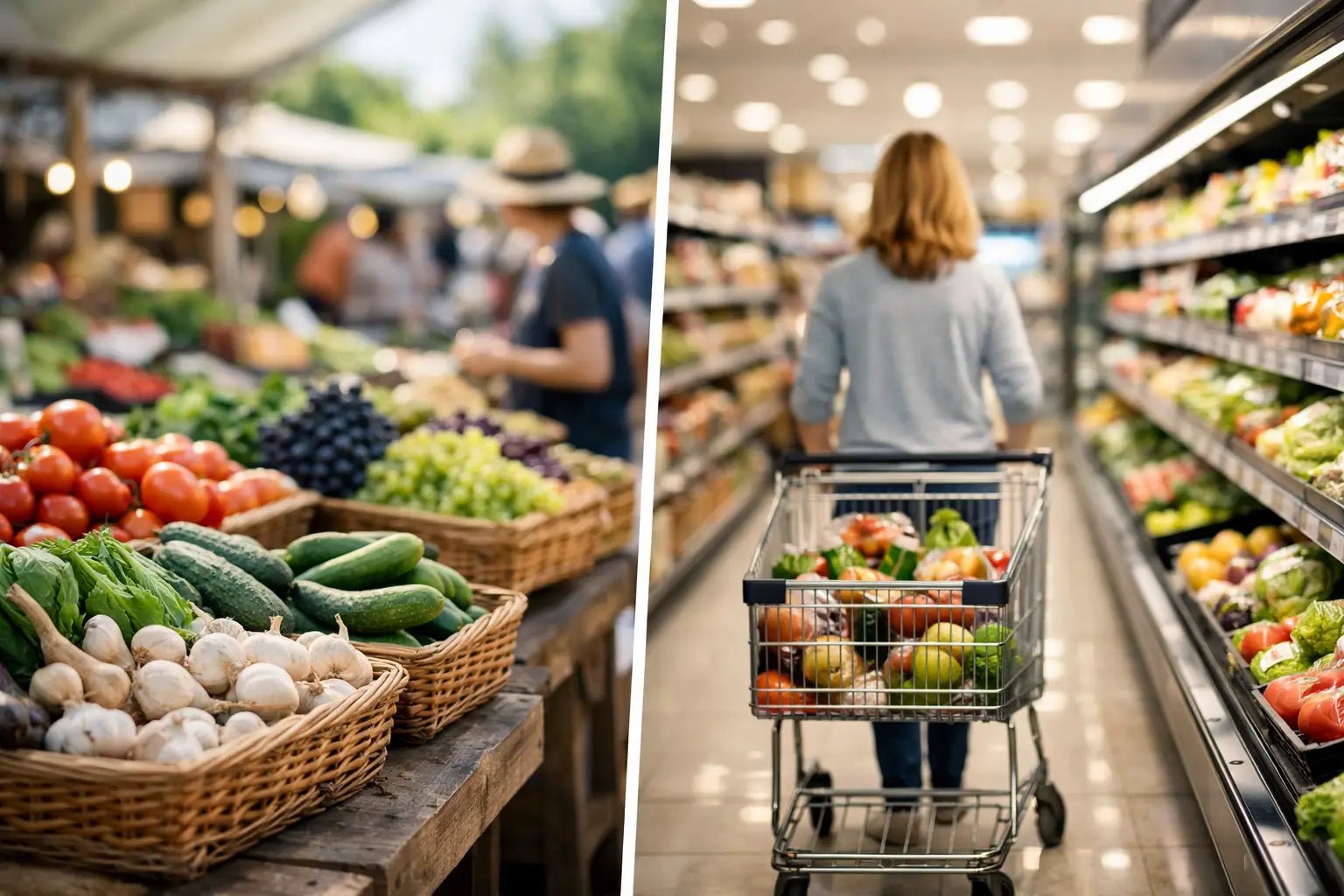
A weekly shop used to mean one thing - a trip to the supermarket, a trolley full of essentials, and whatever else you remembered at the last minute. Now, marketplace vs supermarket shopping is a real choice for UK households, and for plenty of people the better option depends on where the savings are, how quickly they need items, and whether they want everything in one order.
For budget-focused shoppers, this is not a lifestyle debate. It is a practical one. If you are buying pantry staples, cleaning products, baby items, pet care, toiletries, workwear and a few household extras, the key question is simple: which option gives you better value with less hassle?
Marketplace vs supermarket shopping: what is the difference?
A supermarket is built around its own stock, its own shelves and its own pricing. Whether you shop in store or online, you are usually buying from one retailer with a familiar range of groceries and household essentials. That can make the experience straightforward, especially for fresh food and branded staples you buy every week.
A marketplace works differently. It brings together a broader mix of products in one place, often combining grocery-style essentials with general merchandise. That matters when your shopping list is not just bread, milk and pasta, but bin bags, shampoo, nappies, printer paper, pet food and a phone charger as well.
The main difference is breadth. Supermarkets are strong on routine food shopping. Marketplaces can cover routine shopping plus the extra categories that usually force a second or third purchase somewhere else.
Where supermarkets still make sense
Supermarkets remain a solid choice for shoppers who want a traditional grocery run. If you like choosing your fruit and veg in person, checking dates on chilled items, or sticking to a regular list of known brands, a supermarket can feel more predictable.
They also work well when speed matters locally. If you have run out of tea bags, washing powder or sandwich fillings and need them today, a nearby supermarket can solve the problem fast. For many households, that convenience is hard to beat.
There is also the habit factor. Plenty of shoppers know the layout, know the offers, and know roughly what the total should be before they reach the till. That familiarity can make budgeting easier, even when prices are not always the lowest.
The drawback is that supermarkets are often less flexible once your basket moves beyond standard groceries. You may get tonight's dinner and this week's cereal, but not necessarily the best value on electronics, workwear, office supplies or specialist household items in the same order.
Why marketplace shopping appeals to value-led households
Marketplace shopping suits people who want to stretch the budget across more than just food. Instead of treating groceries, toiletries, cleaning supplies and general household items as separate jobs, a marketplace can bring them together.
That matters because real-world shopping is rarely tidy. You start with pasta, cereal and tinned tomatoes, then remember toothbrushes, kitchen roll, baby wipes, laundry tablets and dog treats. A broader marketplace setup reflects the way people actually shop - not by department, but by need.
Price is another major factor. A marketplace model can create stronger competition across categories, which can help shoppers find better deals without walking from aisle to aisle or opening five different apps. For households watching every pound, small savings across everyday items add up quickly over a month.
Online marketplaces also remove the physical effort from the weekly shop. There is no carrying heavy multipacks home, no queue at the checkout, and no extra spend triggered by whatever is stacked near the end of the aisle. You can compare, add, remove and reorder from home, which often leads to more controlled spending.
Price, promotions and the real cost of convenience
Price labels rarely tell the full story. With supermarket shopping, a product may look cheap until you factor in travel, parking, impulse purchases or the fact that you still need to shop elsewhere for non-grocery items. A lower shelf price does not always mean a lower total spend.
With marketplace shopping, the value often shows up in the full basket rather than one headline item. If you can buy food cupboard staples, personal care, pet supplies and home essentials in one order, you save both time and extra costs attached to separate trips.
This is where service terms matter as much as pricing. Free shipping, delivery guarantees, simple returns and refunds for issues can make a marketplace offer much more practical for everyday use. For shoppers who want low prices without added risk, those protections are not a bonus. They are part of the value.
That said, it depends on what you are buying. Fresh produce and short-dated chilled goods may still feel easier in a supermarket setting for some shoppers. On the other hand, ambient groceries, frozen food, toiletries, nappies, cleaning products and household staples are often well suited to online marketplace buying.
Choice matters, but only when it helps
More choice is useful up to a point. A supermarket gives you a curated range, which can make decisions quicker. If you always buy the same pasta sauce and the same tea, too much variety may feel unnecessary.
A marketplace is stronger when you want options across price points, pack sizes and categories. That is especially useful for larger households, parents, pet owners or anyone balancing a strict budget. One shopper may want the cheapest sensible option. Another may prefer a larger pack that reduces the cost per use. Having both available in one place is a practical advantage.
This broader choice also helps small businesses and trade buyers. If you are ordering catering groceries, workplace supplies, signs, safety wear or stock for day-to-day use, a marketplace can be more efficient than relying on a supermarket designed mainly for domestic shopping.
Marketplace vs supermarket shopping for busy families
For families, convenience is rarely about speed alone. It is about reducing the number of separate tasks in a week. A supermarket trip can still work well for a focused food shop, but it often becomes less efficient when the list expands.
Parents are a good example. A simple grocery order can turn into a search for baby products, school snacks, toiletries, cleaning items, clothing basics and household replacements. If those needs are split across several retailers, the week's admin grows with them.
Marketplace shopping reduces that friction. You can handle regular essentials and unexpected extras in one place, reorder items you use often, and avoid the stop-start pattern of shopping across multiple sites or stores. For a family trying to keep costs down and cupboards stocked, that convenience is not just pleasant. It saves time and helps prevent forgotten purchases.
When supermarket shopping still wins
It would be unrealistic to say a marketplace always beats a supermarket. It does not. If you want to hand-pick fresh bakery items, compare cuts at a meat counter, or grab ingredients for tonight's meal within the hour, a supermarket can still be the better fit.
Some shoppers also prefer the certainty of seeing every item in person before buying. That is understandable, especially for fresh food. And if you only need a very short list, the quickest option may simply be the nearest store.
But that does not make supermarkets the better choice for every shop. It usually means they are better for certain types of purchases, while marketplaces are stronger for broader, value-focused household buying.
How to choose the right option for your next shop
The easiest way to decide is to look at your basket, not your habits. If your list is mostly fresh food for immediate use, a supermarket may be the more natural option. If your basket includes packaged groceries, frozen foods, household essentials, health and beauty products, baby items, pet care and practical extras, a marketplace can offer better overall efficiency.
It also helps to think in terms of total spend over time. One shop may look cheaper on paper, but if it leads to extra trips, split orders or missed deals in other categories, it may not be the better value route.
For shoppers who want affordability, broad choice and dependable fulfilment, a value-led online retailer such as Honesty Sales fits the reality of modern household buying. The appeal is straightforward: low prices, a wide range of essentials and general merchandise, and fewer reasons to shop around.
The best shopping method is the one that keeps your costs down, your home stocked and your week a bit easier. If that means mixing both approaches, that is sensible too. Shop where it works hardest for your budget.

