
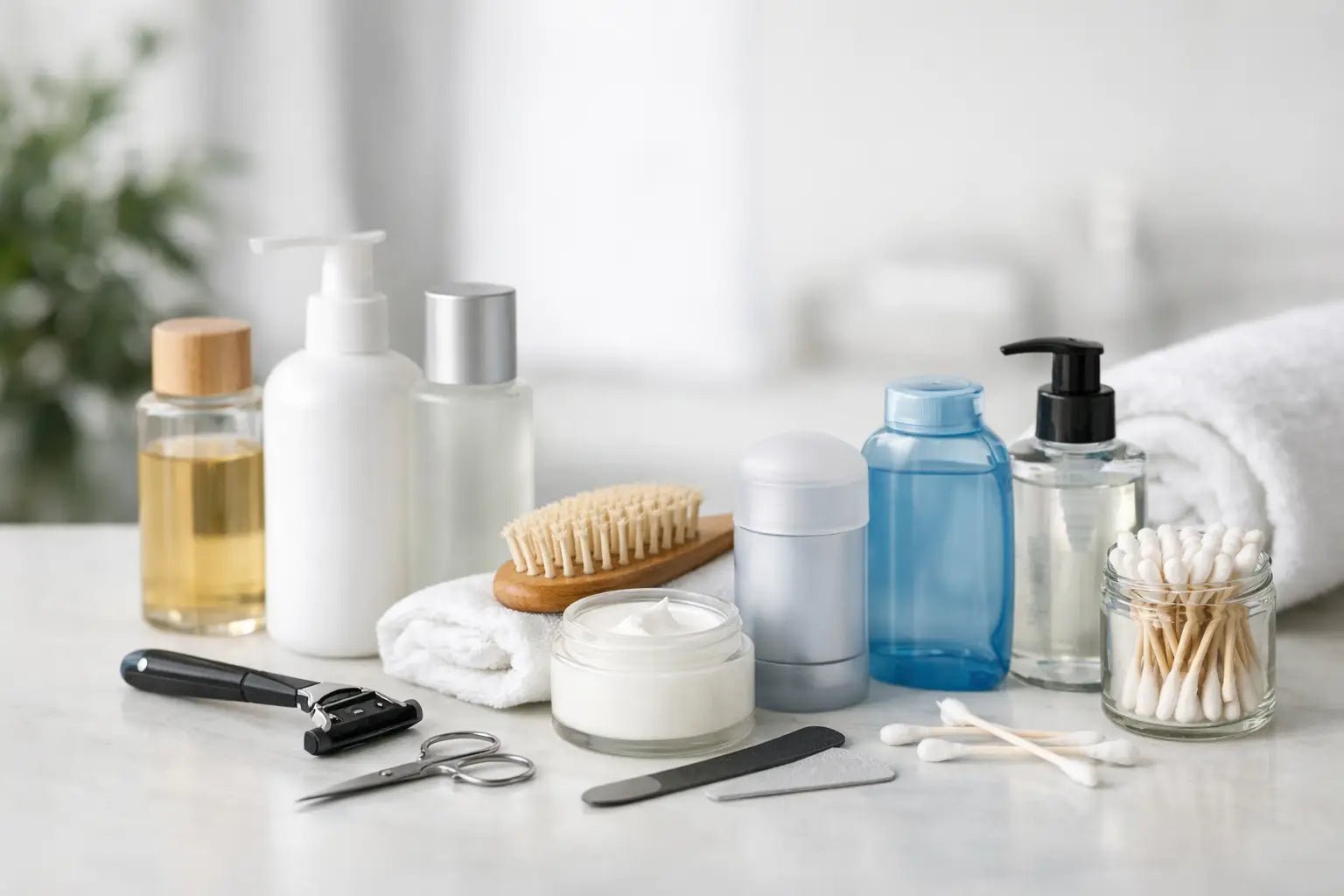
The bathroom cupboard usually shows where a household budget gets quietly stretched: a half-empty toothpaste tube, the last few nappies, a shampoo nobody likes and a forgotten deodorant at the back. Keeping the right personal care essentials on hand makes daily routines easier, avoids costly last-minute shops and helps every member of the household feel prepared.
The best approach is practical rather than complicated. Buy the items used regularly, choose sizes that suit how quickly your household gets through them, and keep a small reserve of the products that are hardest to go without. There is no need to fill cupboards with expensive trends when reliable everyday basics do the job.
Personal Care Essentials Worth Keeping Stocked
A useful personal care cupboard covers washing, dental care, hygiene, skin care and the specific needs of babies, children or older relatives. What counts as essential will vary between homes, but a core selection keeps routine shopping straightforward.
For everyday washing, most households need soap or hand wash, shower gel or body wash, shampoo, conditioner and a gentle moisturiser. Hand wash deserves a regular place near sinks in the kitchen and bathroom, particularly in busy family homes. Bar soap can be a sensible lower-cost alternative for some uses, while liquid hand wash may be more convenient for children and shared spaces.
Dental products are equally easy to overlook until they run out. Keep toothpaste, toothbrushes, floss or interdental brushes, and mouthwash if it suits your routine. Toothbrushes need replacing regularly, so keeping spares prevents anyone using a worn brush longer than they should. Adults and children may need different toothpaste, brush sizes or flavours, so check the label before adding multipacks to your basket.
Daily hygiene also includes deodorant, sanitary products, toilet tissue, tissues, cotton wool and shaving products where needed. These items are often bought in a hurry, which is why value packs can be useful. They are particularly worthwhile for toilet tissue, tissues, sanitary towels, tampons, cotton pads and family-size wash products when you know they will be used before their best-before or recommended use date.
Build Your List Around Real Household Habits
The cheapest pack is not always the best value if it takes up space or contains a product that goes unused. Start with the people in your home and the routines they actually follow. A single adult in a flat may prefer smaller bottles and a simple list. A larger family may save more by choosing bigger packs of fast-moving products and keeping a clear storage area for refills.
Think about frequency. Toothpaste, hand wash, shampoo and deodorant are regular purchases for many people. Face masks, specialist hair treatments and occasional grooming products are less predictable. Put the everyday items on a repeat shopping list first, then add optional items only when needed.
It helps to separate products into three groups: items used every day, items needed weekly or monthly, and emergency spares. Everyday products should be easy to reach. Less-used products can go in a cupboard or drawer. Emergency spares, such as a spare toothbrush, period products, plasters, baby wipes or travel deodorant, are best kept together so they can be found quickly.
For shared households, a simple note on the fridge or a list on your phone can stop duplicate buying. Add a product when the final unopened spare is opened, not when the last drop has gone. That gives you time to compare prices and include it with the rest of your household order.
Everyday Hygiene for Different Needs
A good essentials list has room for different ages and skin types. Babies and young children may need fragrance-free wipes, gentle wash, nappy cream, nappies, cotton wool and child-friendly toothpaste. Parents often find that keeping a small changing kit ready for days out reduces stress, especially when wipes and nappies are bought before supplies are low.
Teenagers may use more shampoo, deodorant, shower gel and skin care products than younger children. Give them a dedicated space if possible, while still keeping shared basics such as hand wash and toothpaste visible. It makes it easier to see what needs replacing and can reduce waste caused by several open bottles at once.
For adults, the list may include razors, shaving foam or gel, moisturiser, hair care, facial cleansing products and personal hygiene items. Sensitive skin changes the calculation. A low-priced product is only good value if it is comfortable to use, so choose fragrance-free or dermatologically tested options where a household member knows they react to certain ingredients. Patch testing a new skin product can be sensible, particularly for children or people with easily irritated skin.
Older relatives, visitors and people with mobility needs may benefit from easy-open packaging, pump bottles and products stored at a reachable height. A few thoughtful choices can make ordinary routines more manageable without adding unnecessary expense.
Value Packs, Single Items and Storage Space
Buying larger packs can lower the cost per use, but only when the product fits your household. Bulk buying works well for products with a steady turnover, such as toothpaste, toilet tissue, soap, shampoo, nappies and menstrual care. It can be less suitable for cosmetics, treatments with active ingredients or products you are trying for the first time.
Before choosing a larger pack, consider four things:
- How quickly your household will use it
- Whether you have a cool, dry place to store it
- Whether everyone is happy with the scent, formula or size
- The unit price, rather than the price printed most prominently
For families working to a weekly budget, mixing pack sizes can be the most realistic option. Pick larger packs for clear household staples, then buy smaller versions of new or less frequently used products. This spreads the cost while still cutting down on emergency purchases.
A Simple Personal Care Restock Routine
A five-minute check before a regular shop can prevent gaps in the cupboard. Look at toothpaste, toothbrushes, hand wash, shampoo, conditioner, deodorant, toilet tissue, sanitary products, wipes and any baby care items. Check whether any product is close to empty or whether you have opened the final spare.
Avoid buying several replacements just because a product is on offer if you already have enough for months. Deals are useful when they match a genuine need, not when they create clutter. The aim is a calm, usable supply of essentials, not an overflowing cabinet full of products nobody reaches for.
Keep an eye on expiry dates for items such as sunscreen, certain skin care products and first-aid supplies. Sunscreen is often treated as seasonal, but it is useful throughout the year when spending time outdoors. First-aid items are not personal care in the strictest sense, yet plasters, antiseptic wipes and a basic thermometer are sensible companions to a well-organised bathroom cupboard.
Save Money Without Cutting Corners
Price-conscious shopping does not have to mean settling for poor quality. Compare size, quantity and intended use, and choose familiar products for the items your household uses constantly. For non-brand-sensitive basics, trying a lower-cost alternative can free up room in the budget for products where a particular formula genuinely matters.
Consolidating groceries, household supplies and personal care in one order can also make routine shopping easier to manage. At Honesty Sales, shoppers can browse practical daily essentials alongside wider household needs, helping reduce the number of separate shops to organise.
Be careful with products that make claims you do not need. A more expensive bottle is not automatically better for ordinary washing, and a long list of ingredients is not a guarantee of better results. Read the label, consider the user, and choose what will be used consistently.
A well-stocked personal care cupboard is a small form of household planning. Keep the basics visible, replace them before they run out and buy in quantities that make sense for your space and budget. Those simple habits leave less to sort out on busy mornings and more money for the things your household needs next.

