
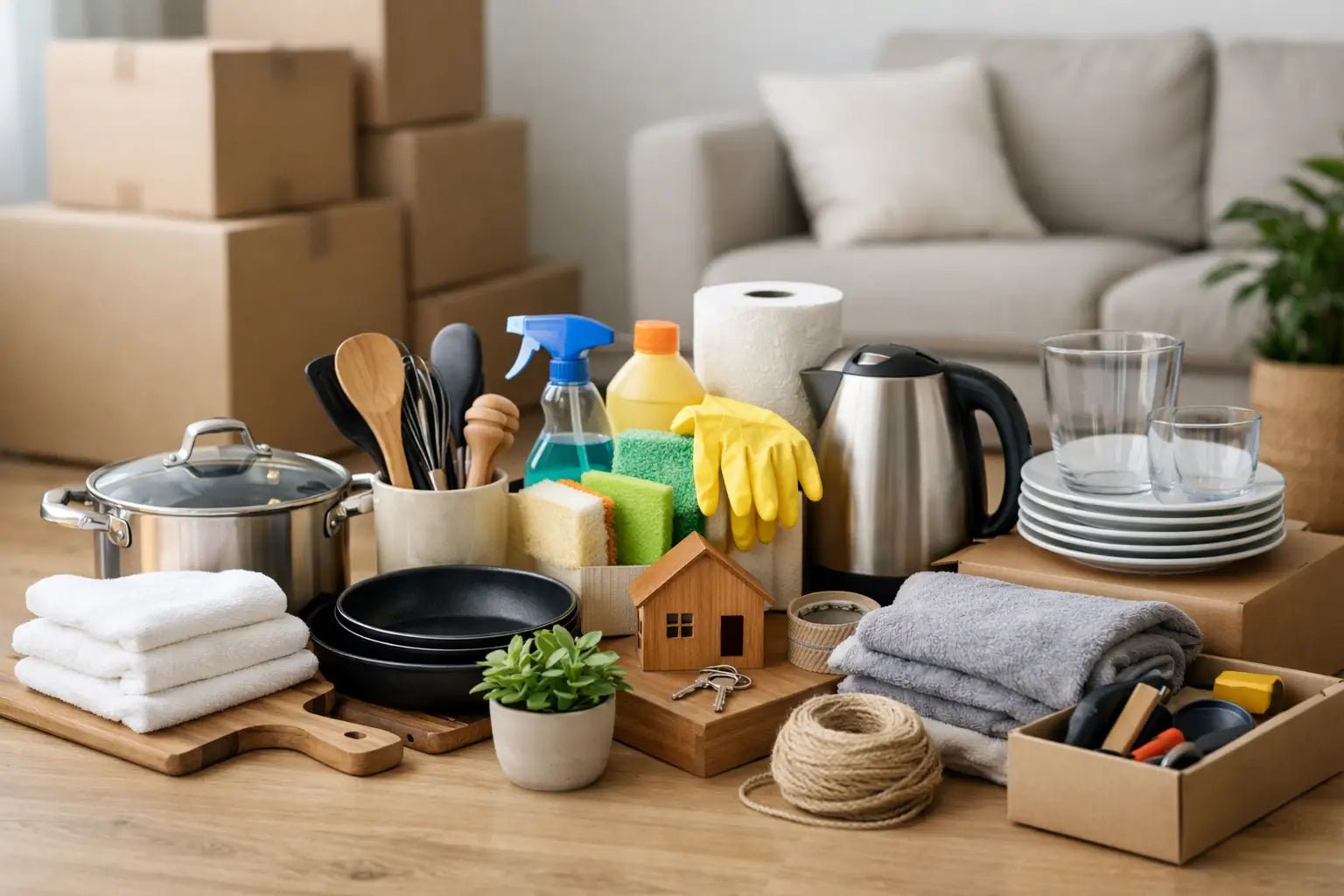
The first evening in a new home quickly shows what you forgot. You may have the keys, a mattress and plenty of boxes, but no loo roll, washing-up liquid or mug for a cup of tea. If you are asking, “what are essential first home supplies?”, start with the things that make the property clean, safe and usable from day one - then add comforts and larger purchases as your budget allows.
There is no need to fill every cupboard before moving in. Buying essentials in the right order helps avoid duplicate purchases, cuts waste and leaves more money for the items that genuinely improve daily life.
What are essential first home supplies? Start with day-one basics
Before unpacking properly, make sure you have a small bag or box that stays easy to find. It should cover your first night and the following morning: toilet roll, hand soap, bin bags, kitchen roll, a basic first-aid kit, phone chargers, a torch, batteries, scissors, a multi-purpose screwdriver and a pen.
Add a kettle, tea or coffee, long-life milk, drinking water, a few easy meals and basic snacks. Even if you plan a food shop after moving, delays happen. Having something simple to eat means you are not trying to find a supermarket while tired and surrounded by boxes.
You will also want bedding ready before anything else. At minimum, buy a duvet or blanket, pillows, pillowcases, a fitted sheet and a spare set of bedding. Towels, pyjamas, toiletries and a change of clothes should be packed separately too. These are low-cost items compared with furniture, but they make a big difference to the first few days.
Clean before you settle in
Even a property that looks clean benefits from a proper wipe-down before cupboards are filled and furniture is moved into place. Focus first on food-preparation surfaces, the bathroom, door handles, light switches and floors. You do not need a cupboard full of specialist sprays to get started.
A sensible cleaning kit includes:
- Multi-purpose cleaner, washing-up liquid and disinfectant
- Microfibre cloths, sponges, rubber gloves and kitchen roll
- A mop and bucket, broom and dustpan, or a vacuum cleaner
- Toilet brush, toilet cleaner and limescale remover
- Laundry detergent, stain remover and a clothes airer or pegs
A laundry basket is easy to overlook but useful from the start. If the property has no tumble dryer, a clothes airer is usually a better first purchase than relying on radiators, which can increase condensation indoors.
Kitchen supplies that earn their cupboard space
A new kitchen does not need a full matching dinner set straight away. Start with enough cookware and tableware for the people living there, plus a little spare capacity for a guest. If you are moving into a flat with limited storage, choose stackable bowls and pans that can do more than one job.
The core cooking set is simple: one frying pan, one saucepan with a lid, a larger pan or casserole dish, a baking tray, oven gloves, a chopping board, a sharp kitchen knife, a wooden spoon, spatula, colander and tin opener. A measuring jug, grater and food storage tubs are also useful for everyday cooking and reducing food waste.
For eating and drinking, begin with plates, bowls, mugs, glasses, cutlery and a kettle. A toaster and microwave are convenient, but whether they are essential depends on how you cook. Someone who batch-cooks may get more value from a freezer and storage containers, while a busy family might prioritise a microwave for quick meals.
Do not forget washing-up supplies. A washing-up bowl can be helpful where the sink is small, while a draining rack and tea towels keep worktops manageable. If you have a dishwasher, still keep washing-up liquid and a sponge for pans and quick clean-ups.
Bathroom and personal-care essentials
Bathrooms are usually functional sooner than kitchens, but small missing items can be frustrating. Stock toilet roll, hand wash, bath towels, a bath mat, shower curtain if needed, shower gel, shampoo, toothpaste, toothbrushes and sanitary products. Keep a plunger nearby rather than waiting until it becomes urgent.
A small bathroom bin, cleaning cloths and a laundry basket help keep the room tidy. Check whether there is suitable storage for medicines, razors and toiletries. If there is not, a simple caddy or shelf unit can prevent clutter around the basin.
For first aid, keep plasters, sterile dressings, antiseptic wipes, pain relief suitable for your household, a thermometer and any regular medication in a dry, secure place. This is not about creating a clinical cupboard. It is about being prepared for minor cuts, headaches and the everyday mishaps that seem more likely during a move.
Safety supplies are not optional extras
Some safety equipment may already be installed, but do not assume it works. Test smoke alarms when you move in and check the date on any existing fire extinguisher or fire blanket. If you rent, report missing or faulty alarms to the landlord or letting agent promptly. If you own the property, replace batteries or units where required.
Keep a torch where everyone can find it during a power cut. A basic tool kit is equally worthwhile for tightening loose screws, hanging a picture or dealing with a flat-pack emergency. Include a hammer, tape measure, screwdrivers, pliers, picture hooks, wall fixings and strong tape. Check walls and hidden pipes before drilling, particularly in older homes.
It is also sensible to know where the water stopcock, fuse box and gas shut-off are located. Ask during handover if you are unsure. Taking meter readings and photographing them on move-in day can make later billing questions much easier to resolve.
Make the home comfortable room by room
Once the basics are covered, buy the supplies that make the space work for your routine. Curtains or blinds may be a priority for privacy and sleep. Lamps can make a room feel more practical than relying on one bright ceiling light. Extension leads and spare bulbs are useful, but avoid overloading sockets or running leads under rugs.
In the bedroom, consider hangers, a laundry hamper, bedside lighting and basic storage before spending on decorative pieces. In the living room, a throw, cushions and a small side table can wait if money is tight. Seating, lighting and somewhere to put a drink tend to matter more than a fully styled room.
For families, add childproof cupboard catches, stair gates, socket covers where appropriate and non-slip mats based on the child’s age and the layout of the property. Pet owners may need food and water bowls, waste bags, a bed, grooming supplies and a safe area while doors are being opened during the move.
Buy supplies in stages to protect your budget
The best first-home checklist is not necessarily the longest one. Separate purchases into urgent, useful soon and later. Urgent items cover hygiene, food, sleep, cleaning and safety. Useful-soon items improve organisation, cooking and comfort. Later purchases include decorative accessories, duplicate gadgets and furniture that you cannot yet measure properly.
Measure rooms, cupboards and doorways before ordering large items. A bargain is not good value if it will not fit through the hallway or leaves no space to open a cupboard door. This matters especially in smaller UK flats, where every shelf and corner has to work harder.
Buying multi-packs of regularly used items such as loo roll, bin liners, soap, laundry detergent and cupboard food can offer better value, provided you have somewhere dry to store them. For less predictable needs, buy a smaller size first. You may find that the brand, scent or format does not suit your household.
A single shop for groceries, household cleaning, personal care, kitchen basics and everyday storage can also save time when the move is already busy. Honesty Sales is built around practical essentials at value-focused prices, helping households add the basics without turning a new-home shop into a long list of separate errands.
Before you buy another decorative item, walk through each room and ask a simpler question: can we sleep, wash, eat, clean and stay safe here this week? If the answer is yes, you have covered the essentials. The rest can be chosen gradually, when you know how you actually live in the space.

