
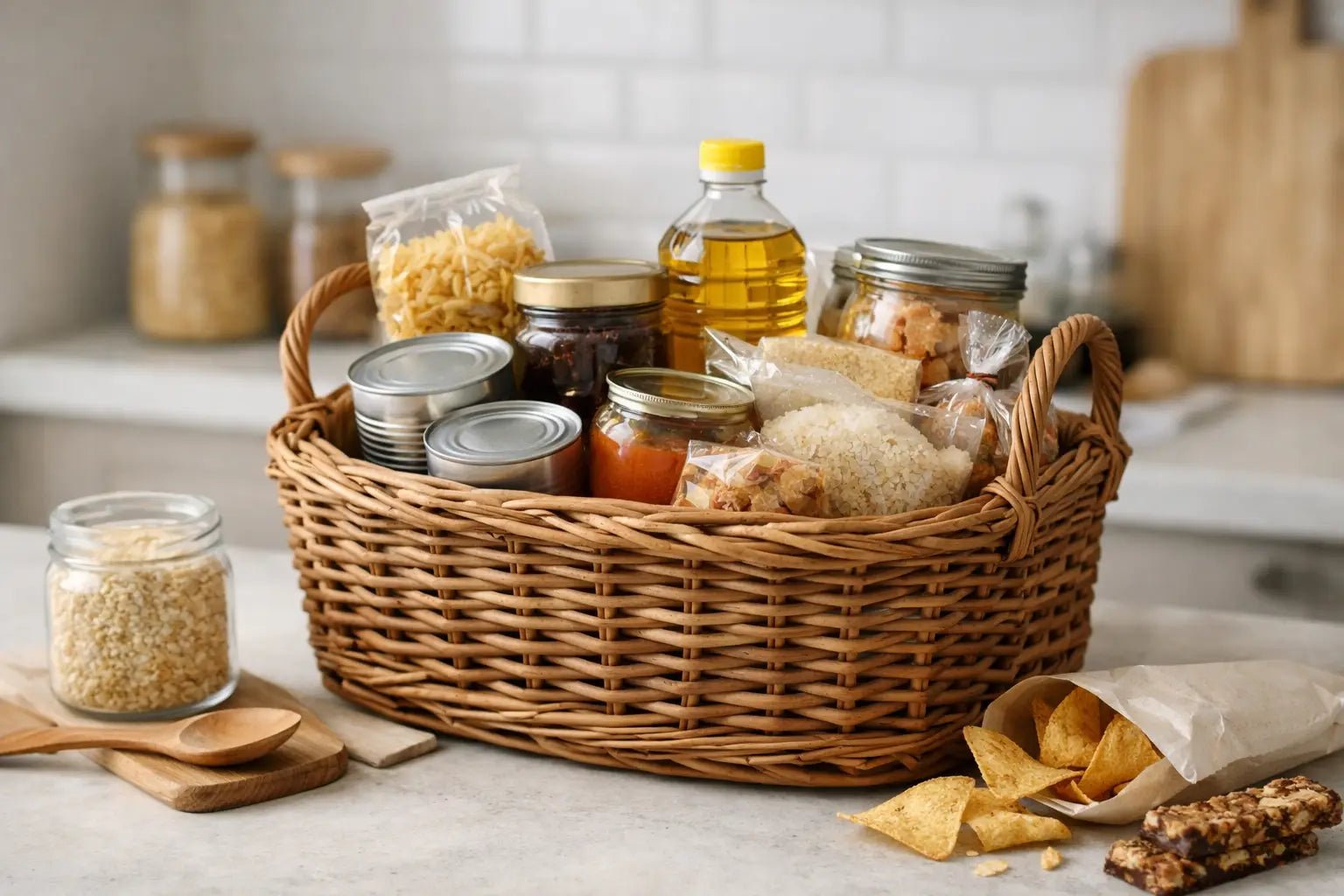
A well-planned pantry basket can make the difference between an expensive last-minute shop and a straightforward evening meal made from what you already have. If you are learning how to build a pantry basket, start with the foods your household genuinely uses, then add value packs and versatile basics that stretch across breakfasts, packed lunches and family dinners.
The aim is not to fill every cupboard shelf at once. It is to keep affordable essentials on hand, reduce food waste and make routine shopping easier. Build it gradually around your budget, your storage space and the number of people you feed.
Start with the meals you already make
Before adding tins and packets to your basket, think about the meals that appear most often at home. A household that relies on pasta bakes, chilli, soups and sandwiches needs different staples from one that cooks rice dishes, curries and porridge most days.
Write down five to eight regular meals, then look for the ingredients they share. Pasta, tinned tomatoes, chopped vegetables, beans, stock cubes and herbs can cover several low-cost dishes. Rice, lentils, coconut milk and curry sauce may do the same for a different weekly menu.
This simple check stops a common budget-shopping mistake: buying items because they seem useful, only for them to stay at the back of the cupboard. A pantry basket should save time and money, not become a collection of unused bargains.
How to build a pantry basket: choose the core staples
A practical pantry usually has a mix of carbohydrates, proteins, cooking ingredients and flavour boosters. Choose familiar options first. Store brands and larger packs can offer good value where you know the item will be used before its best-before date.
Your first basket may include:
- Pasta, rice, noodles, couscous or other easy meal bases
- Tinned tomatoes, baked beans, sweetcorn, peas and other vegetables
- Tinned fish, beans, lentils and chickpeas for affordable protein
- Breakfast basics such as oats, cereal, long-life milk and spreads
- Flour, sugar, cooking oil, stock cubes, salt, pepper and everyday herbs
- Tea, coffee, squash or other drinks your household buys regularly
For example, a tin of chopped tomatoes can become pasta sauce, soup, chilli or a casserole base. Oats can make porridge, flapjacks or a simple crumble topping. Choosing flexible products helps each pound go further.
Build in affordable protein and filling foods
A basket made only of sauces and pasta will not carry many meals. Add filling ingredients that can turn a small amount of fresh meat or vegetables into a more substantial dish.
Beans, lentils and chickpeas are useful because they store well and work in curries, soups, stews, salads and wraps. Tinned tuna, mackerel or sardines can provide quick lunch options, while peanut butter, nuts and seeds can suit breakfasts and snacks if they fit your household's needs.
Dried pulses are often economical, but they take longer to cook and may need soaking. Tinned versions are more convenient for busy weeknights. Neither choice is automatically better. Pick the option you are most likely to use, especially if convenience helps you avoid a takeaway or an extra trip to the supermarket.
Add flavour without buying a cupboard full of jars
Plain staples become easier to use when you have a few reliable seasonings. Keep this section simple at first: cooking oil, vinegar, salt, black pepper, mixed herbs, dried garlic, curry powder and stock cubes will cover a lot of everyday cooking.
If your family enjoys particular flavours, add them slowly. Soy sauce, hot sauce, gravy granules, tomato purée and peanut butter can all earn their place when they appear in your regular meals. Check what is already open before replacing it, and avoid buying large jars of unfamiliar condiments just because they are on offer.
A good value deal is only a saving if it gets used. That is especially true for sauces, baking decorations and speciality spices that can sit unopened for months.
Think beyond food basics
For many households, a pantry basket works best when it covers the small essentials that run out at inconvenient times. Adding a few household items to your routine order can reduce separate shopping trips and help you keep spending organised.
Consider including kitchen roll, bin bags, washing-up liquid, foil, food bags and cleaning cloths when stocks are low. Families with young children may also keep long-life snacks, nappies or wipes in their regular basket. The right mix depends on your home, but grouping everyday needs together makes it easier to see what you have and what needs replacing.
Shopping broad household categories in one place can also make budgeting simpler. At Honesty Sales, shoppers can combine cupboard groceries with practical home essentials, helping routine orders stay focused on value and convenience.
Set quantities that suit your space and budget
Buying in bulk can lower the cost per item, but it is not always the cheapest choice overall. If a bigger pack will go stale, be forgotten or leave no room for other essentials, a smaller size may be the better buy.
Start with a one- or two-week supply of foods you use regularly. For a small household, that might mean one bag of rice, two pasta packets, a handful of tins and a few breakfast staples. A larger family may need bigger quantities, particularly for lunchbox foods, cereal and cooking ingredients.
Keep an eye on the price per 100g, per litre or per item where it is shown. This helps you compare pack sizes fairly. Still, price is only one part of value. A slightly smaller pack that fits this week's budget and gets fully used may be the sensible option.
Store your pantry basket so it gets used
A low-cost pantry only works if you can see what is in it. Put newly bought items behind older ones and use the older products first. This straightforward rotation reduces waste and keeps best-before dates from creeping up unnoticed.
Group items by use rather than trying to create a picture-perfect cupboard. Keep breakfast foods together, baking ingredients together and tins in one clear section. A small basket or box for packets, sauces and snacks can stop them disappearing behind larger items.
If you decant dry foods into containers, label them clearly with the item name and best-before date. Reusing jars can be handy, but only if they are clean, dry and easy to identify. Original packaging is often simpler for busy households, so do what works for you.
Refresh the basket as part of your weekly shop
Rather than rebuilding your pantry every month, check it briefly before placing a grocery order. Look for items that are nearly finished, meals you plan to cook and products approaching their date. Replace only what is needed, while topping up a few dependable favourites when the price is right.
It can help to keep a small note on the fridge or in your phone for items as they run out. This prevents duplicate purchases and means your order is based on real household use, not guesswork.
Seasonal changes matter too. In colder months, you may use more soup ingredients, hot drinks and porridge. During school holidays, snacks, cereal and easy lunch items can disappear faster. Adjusting quantities is usually more effective than stocking a completely different cupboard.
Make room for a few easy backup meals
The most useful pantry basket includes ingredients for at least two or three quick meals when fresh food is running low. Think pasta with tomato sauce and beans, jacket potatoes with tuna and sweetcorn, or lentil soup with bread. These are not complicated recipes, but they can protect the household budget when plans change.
Keep the backup meals realistic. Choose dishes your family will eat and that you can prepare with the equipment and time you have. A modest cupboard of familiar basics is more valuable than an ambitious stockpile that never becomes dinner.
Start with your next few meals, add the staples they share, and build from there. Over time, your pantry basket will become a dependable reserve of affordable food and household essentials that makes everyday shopping less stressful.

