
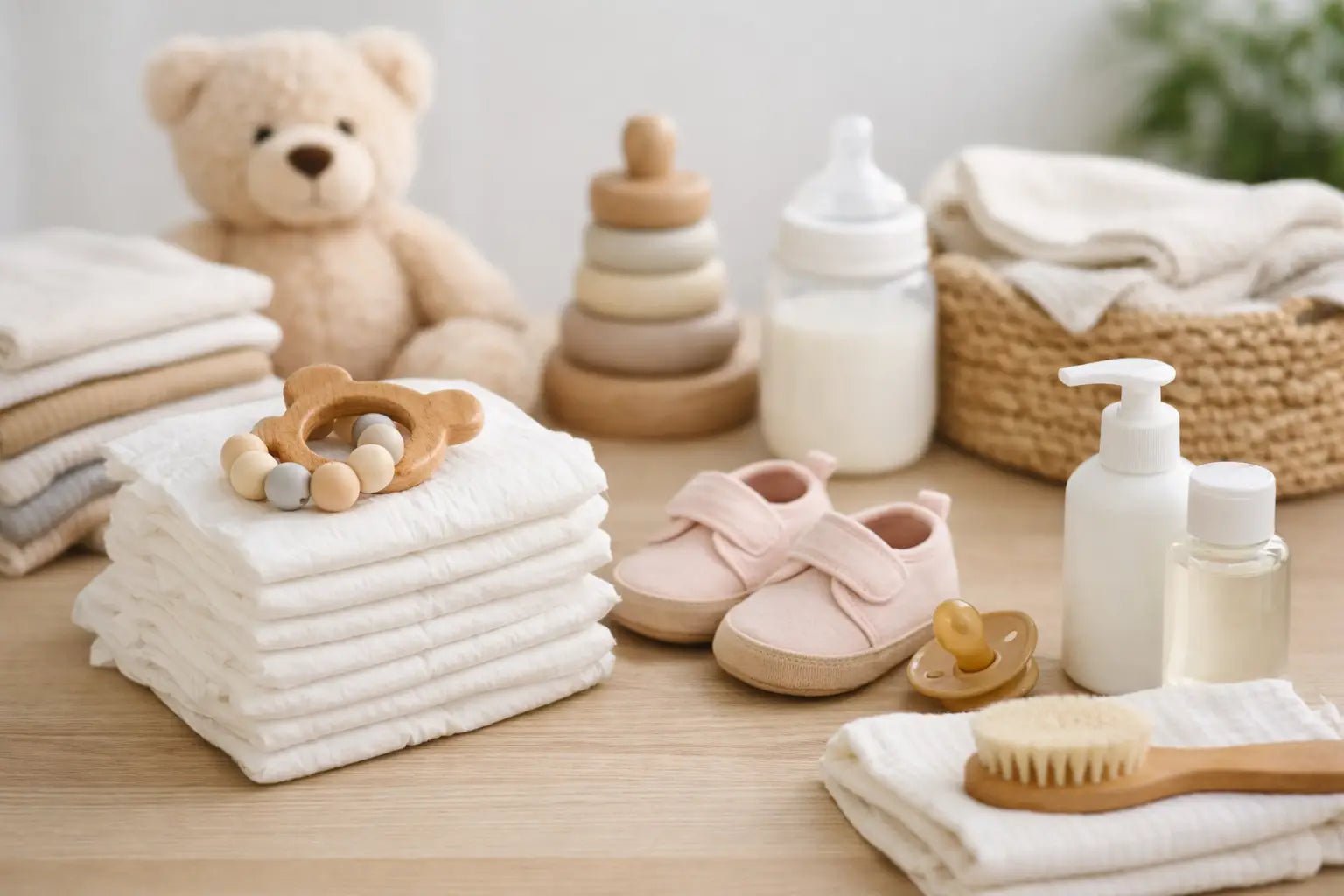
The baby aisle gets expensive fast. One minute you are picking up a pack of muslins, the next you have a basket full of extras that all sound useful. If you are wondering how to choose affordable baby essentials without cutting corners, the key is simple - buy for real daily use, not for the ideal version of parenting sold on the packaging.
Most new parents do not need the biggest bundle, the trendiest brand, or every gadget marketed as a must-have. What matters is choosing the basics that keep your baby clean, fed, comfortable and safe, then stretching your budget where it actually makes a difference. That approach saves money now and leaves room for repeat buys later, which is where baby costs really add up.
Start with the essentials, not the extras
Before comparing brands or prices, separate true essentials from nice-to-haves. For most households, the non-negotiables are nappies, wipes, baby toiletries, feeding items, a safe place to sleep, basic clothing, and a few travel essentials if you are regularly out and about.
That does not mean buying the cheapest option in every category. It means being honest about what you will use every day. A plain pack of bodysuits that washes well is a better buy than a novelty outfit worn once. A reliable changing mat is more useful than an organiser full of compartments if space and budget are tight.
This is where many parents overspend. Multipacks, gift bundles and starter kits can look like better value, but they often include products you would not have chosen individually. If half the pack sits untouched, it was not a bargain.
How to choose affordable baby essentials by category
A practical way to shop is to think in categories and ask the same question each time: will this save money through regular use, or does it only look good at first glance?
Nappies and wipes
Nappies are an ongoing cost, so value matters. Bigger packs often bring the unit price down, but only if the fit works for your baby. If a cheaper nappy leaks, you may end up using more, changing outfits more often, and washing extra bedding. In that case, it is not the cheapest option after all.
Wipes are similar. Look at price per pack, but also pack size and how quickly they dry out once opened. Some parents do well with fragrance-free budget wipes for everyday use and keep a smaller pack of more specialised wipes for sensitive skin.
Clothing
Babies grow quickly, so avoid buying too much in one size. Focus on soft basics, especially sleepsuits, bodysuits, bibs and socks. These get heavy use and need frequent washing, so durability matters more than appearance.
Go for practical features like envelope necks, simple fastenings and fabrics that cope well with repeat laundering. Fancy trims, stiff fabrics and complicated buttons may look lovely online but can become irritating very quickly when you are doing late-night changes.
Feeding items
Feeding is one area where needs vary. Bottle-feeding families may need bottles, teats, sterilising supplies and formula accessories. Breastfeeding families may want breast pads, storage bags, muslins and maybe a pump. Mixed feeding can require both.
The affordable choice depends on how you feed, not on a universal checklist. Avoid buying a large quantity of one bottle type before your baby has tried it. A small starter set is often the smarter first spend. You can always top up once you know what works.
Toiletries and bath time
Baby toiletries are easy to overbuy because the ranges are so wide. In reality, you usually need less than expected. A gentle baby wash, barrier cream, cotton wool or pads, and perhaps baby shampoo later on will cover most routines.
Bath seats, fancy gift sets and multiple lotions can wait. If your baby has sensitive skin, fewer products may be the better choice anyway. Affordability is not only about price - it is also about avoiding wasted products.
Safety first, but not every premium label is better
When learning how to choose affordable baby essentials, safety should come before style and branding. That applies especially to cots, mattresses, car seats, stair gates and monitors. You do not need the most expensive version, but you do need one that meets current safety standards and suits how you will use it.
For example, a simple baby monitor may be enough if you live in a smaller home and just want dependable sound. Paying extra for a long list of features makes less sense if you know you will only use one or two. The same goes for travel systems. If you mainly walk locally and use the car occasionally, a compact buggy and a separate car seat may be more affordable than a larger all-in-one set.
This is one area where used buying needs care. Some baby gear can be bought second-hand if it is in good condition, but car seats and sleep products need extra caution. If the history is unclear or parts are missing, the lower price is not worth the risk.
Compare the running cost, not just the shelf price
A low upfront price can be misleading. The better question is what the item will cost over weeks or months of use. Formula dispensers, bottle liners, refill systems and specialist bins can seem manageable at first, then become expensive because of ongoing refills and add-ons.
The same applies to clothing and bedding. A cheaper item that loses shape after a few washes may need replacing sooner. A slightly better-made basic can work out more affordable over time. For budget-conscious households, the sweet spot is usually dependable mid-range basics rather than either extreme.
When comparing products, look at pack size, unit pricing, refill requirements and expected lifespan. Small differences add up, especially in the first year.
Buy in stages instead of doing one big shop
It is tempting to buy everything before the baby arrives, especially when you want to feel prepared. But staged buying is often the more affordable route. Start with the first few weeks covered, then add based on real use.
This approach helps in two ways. First, you avoid spending on products your baby may not need. Second, you spread costs across time instead of putting pressure on one large order.
For many families, it also makes shopping easier. Once the basics are sorted, repeat purchases such as nappies, wipes and toiletries can be added to the rest of the household shop. That is often simpler than ordering from several places and paying more in time and delivery charges.
Watch out for the expensive little add-ons
The biggest budget drain is not always the big-ticket item. It is often the extras that slip into the basket unnoticed - nappy cream spatulas, designer dummy cases, multiple muslin packs in different prints, travel bottle warmers and other products that solve a problem you may not actually have.
A good rule is to pause before buying any item that sounds like a convenience upgrade. Ask whether it replaces something useful you already own, whether it will be used weekly, and whether a simpler option does the same job. If the answer is no, leave it for later.
That does not mean never buying helpful extras. It means earning them. If a product would make daily life easier after the baby arrives, you will know soon enough.
How to choose affordable baby essentials without losing convenience
Affordable shopping should still be practical. If buying from one place helps you compare options clearly, keep track of repeat buys, and combine baby items with everyday household essentials, that convenience has value too. For busy parents, time and delivery costs matter just as much as sticker price.
A straightforward way to keep spending under control is to stick to a shortlist. Choose one option in each essential category, compare sizes and prices, then buy what covers immediate needs. Retailers with broad family and household ranges, such as Honesty Sales, can make this easier because you are not forced into separate shops for baby basics, toiletries and home essentials.
Trust your routine more than the marketing
There is no single perfect baby shopping list because every household runs differently. A family with limited storage will shop differently from one with space to bulk buy. A parent using public transport has different priorities from one who drives everywhere. Affordability depends on your routine, not someone else's nursery checklist.
The best buys are usually the least dramatic ones - the soft sleepsuits, the reliable nappies, the simple toiletries, the feeding items that fit your real day. Keep your focus there, and your money goes further without making life harder.
If you shop with that mindset, you do not need to buy everything at once or chase every new product launch. Start with what your baby will genuinely use, leave room to adjust, and let practicality make the decisions.

