
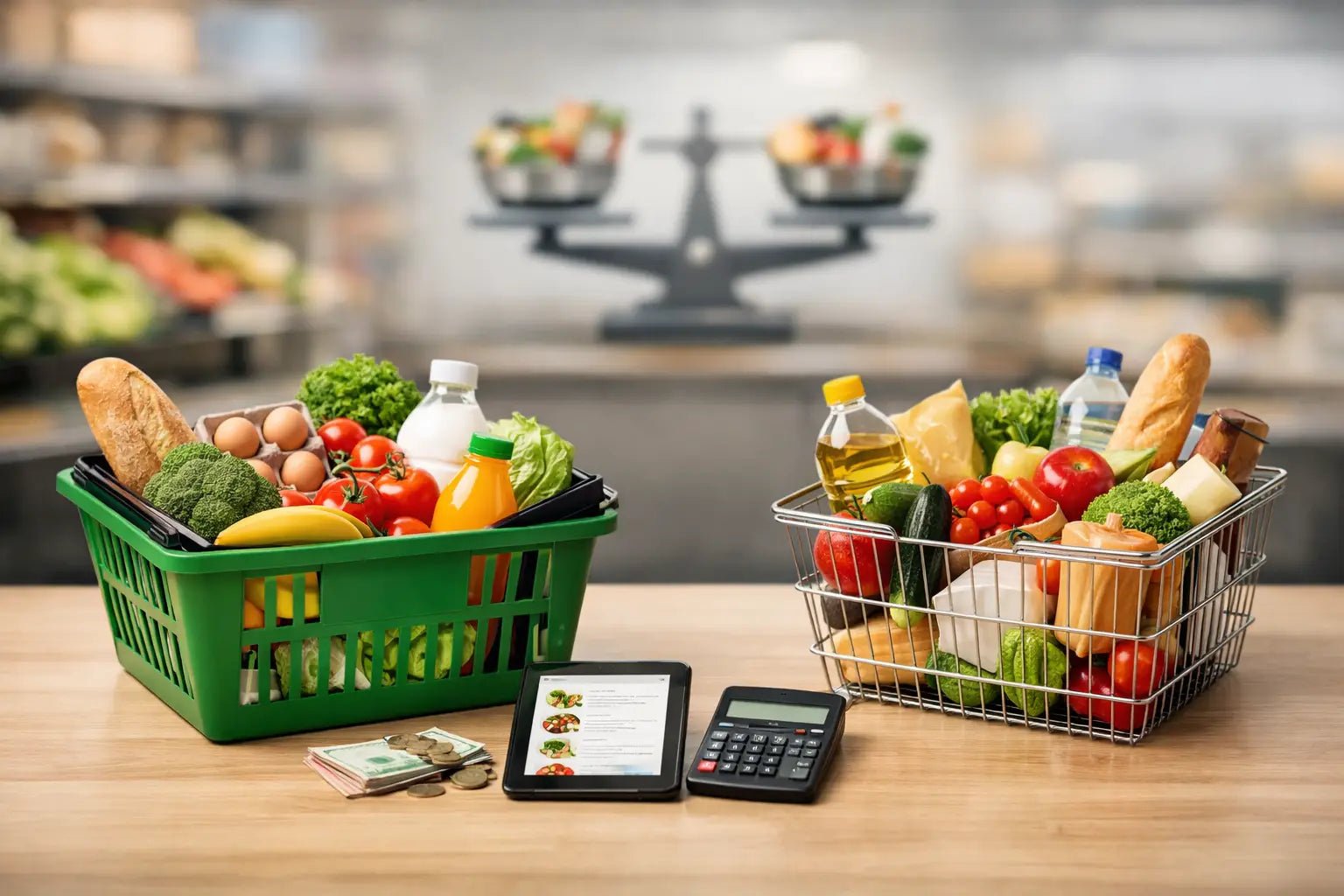
That £1 saving on pasta can disappear fast when the washing-up liquid, nappies or cereal in the same shop cost more. If you want to know how to compare grocery basket prices properly, you need to look at the whole shop, not just the loudest offer on the page. The aim is simple: spend less overall on the items you actually buy every week.
A lot of shoppers compare supermarkets or online stores by memory. One place feels cheaper, another seems better for offers, and a third gets used for top-up bits. The trouble is that memory is easily swayed by a few eye-catching deals. A basket comparison gives you something more useful - a clear view of what your regular essentials really cost when bought together.
What a grocery basket comparison really means
A grocery basket is not a random mix of discounted products. It should reflect your normal shop as closely as possible. That means the cereal your children actually eat, the loo roll pack size you usually buy, the frozen veg you keep in the freezer, and the tea, bread, milk and household basics that always end up in the trolley.
This matters because the cheapest shop for one person may not be the cheapest for another. If one household buys branded baby wipes, cat food and larger packs of rice, while another focuses on fresh fruit, ready meals and toiletries, their cheapest retailer may be different. Price comparison only works when the basket matches real habits.
How to compare grocery basket prices without misleading yourself
Start by building a basket of 20 to 40 items you buy often. Fewer than that, and one or two prices can distort the result. Much more, and the process becomes hard to keep up with. Include a mix of pantry goods, fridge items, freezer staples, cleaning products and personal care if those are part of your usual spend.
Then write down the exact product details. Brand, weight, pack size, quantity and whether it is fresh, frozen or ambient all matter. A 500g pack compared with a 750g pack is not a fair match. Neither is standard toilet roll against a premium quilted range. The closer the match, the more reliable the result.
Once you have your list, total the basket at each retailer on the same day if possible. Prices move, promotions end, and stock changes quickly. If you check one shop on Monday and another on Thursday, your comparison is already less precise.
Always check the unit price
This is where many shoppers save money without changing much about what they buy. Shelf prices can look lower while the pack is smaller. Unit pricing - such as price per 100g, per kg, per litre or per roll - tells you what you are really paying.
For example, a smaller jar of coffee may look like the better deal because the upfront cost is lower. But if the price per 100g is higher, it is only cheaper at the till that day, not better value overall. That may still suit your budget if cash flow is tight, but it is not the same as a genuine price win.
Match own-brand with own-brand and branded with branded
Comparing a budget own-brand tin of chopped tomatoes with a premium branded version does not tell you much. It only tells you that premium products cost more. If you usually buy branded goods, compare the same brand across shops. If you mostly buy value or standard own-brand items, keep the comparison in that lane.
This is especially important with basics like pasta, cereal, beans, cleaning sprays and nappies, where there can be a noticeable gap in both price and product type.
Look beyond headline offers
Multi-buy promotions can make a basket look cheaper than it really is. If you only need one pack of yoghurt, a two-for deal is not always a saving. It can simply push you to spend more than planned. The same goes for bigger packs that only make sense if you will actually use them before they go off.
A proper basket comparison should separate useful offers from spending traps. Ask yourself a simple question: would I buy this quantity anyway? If the answer is no, do not count the promotion as a true saving.
Temporary offers can also hide a retailer's normal pricing. One week, a basket may come out far lower because a handful of products are on promotion. The next week, the gap narrows or disappears. If you want a more dependable picture, compare your basket more than once across a month.
Delivery, minimum spend and hidden costs matter too
For online grocery shopping, basket price alone is not the full number. Delivery charges, minimum order thresholds and substitutions can change the real cost quickly. A retailer with a slightly cheaper basket may work out more expensive once delivery is added.
That is why convenience should be priced in honestly. If one order saves you a separate trip, covers groceries and household essentials together, and avoids multiple delivery fees, the overall value may be better even if a few line items cost slightly more. For many busy households, time and reliability matter alongside price.
If you shop online regularly, also pay attention to free shipping thresholds, refund policies and returns. A low basket total loses its shine if problems are hard to sort out. Strong protections can make repeat buying easier and reduce the risk of wasted spend.
How to compare grocery basket prices when products are not identical
Sometimes exact matches are not available. One shop may stock a different pack size, a different own-brand tier, or a slightly different version of the same product. In those cases, the fairest approach is to compare by unit price first, then decide whether the substitute is close enough to count.
If it is a small difference, such as 900ml versus 1 litre washing-up liquid, unit pricing will usually solve it. If it is a bigger quality or product-category difference, leave it out of the basket rather than forcing a poor comparison. Accuracy matters more than filling every line.
Fresh food needs particular care. Produce quality, shelf life and grade can vary, and cheaper is not always better if more gets wasted. A punnet of berries that spoils quickly is not good value. The same goes for bread, meat, salad and dairy. The real cost includes what ends up in the bin.
Use a core basket and a flexible basket
One practical way to keep comparisons realistic is to split your shopping into two parts. Your core basket includes products you buy almost every week, such as milk, bread, eggs, cereal, rice, pasta, loo roll and cleaning essentials. Your flexible basket includes items that change more often, like snacks, seasonal fruit, offers and one-off household needs.
This gives you a steadier view of pricing. The core basket shows where your regular spend is likely to land. The flexible basket tells you whether a shop is good for add-ons, promotions or larger household top-ups.
For many families, this works better than trying to compare every item from every shop every single week.
Why the cheapest basket is not always the best option
There is a difference between the lowest total and the best value. If the cheapest retailer is often out of stock, offers fewer household basics, or forces you to place extra orders elsewhere, your savings can disappear. The best option is often the place that keeps your routine shop affordable and simple.
That is where broad-range retailers can make a real difference. If you can buy pantry goods, cleaning products, toiletries, baby items and other everyday essentials in one order, it is easier to control total spend and avoid impulse top-up purchases elsewhere. A straightforward online shop with low prices, dependable delivery and clear customer protection can help keep the whole household budget steadier.
A simple routine that keeps costs down
You do not need a spreadsheet full of formulas. A notes app, a saved basket or a basic written list is enough. Review your regular basket once a month, check unit prices when pack sizes change, and be cautious with offers that increase quantity rather than reduce real cost.
It also helps to notice patterns. Some retailers are stronger on cupboard staples. Others are more competitive on household products or bulk packs. Once you know where the real savings sit, you can make better choices without rechecking every single item from scratch.
If you want to keep it easy, compare totals across the products you buy most often and ignore the noise. That approach is usually more useful than chasing every promotion in sight.
A good basket comparison should leave you feeling clearer, not busier. When you know what your essentials cost as a group, it becomes much easier to shop with confidence, avoid false bargains and keep more of your budget for the things that matter.

