
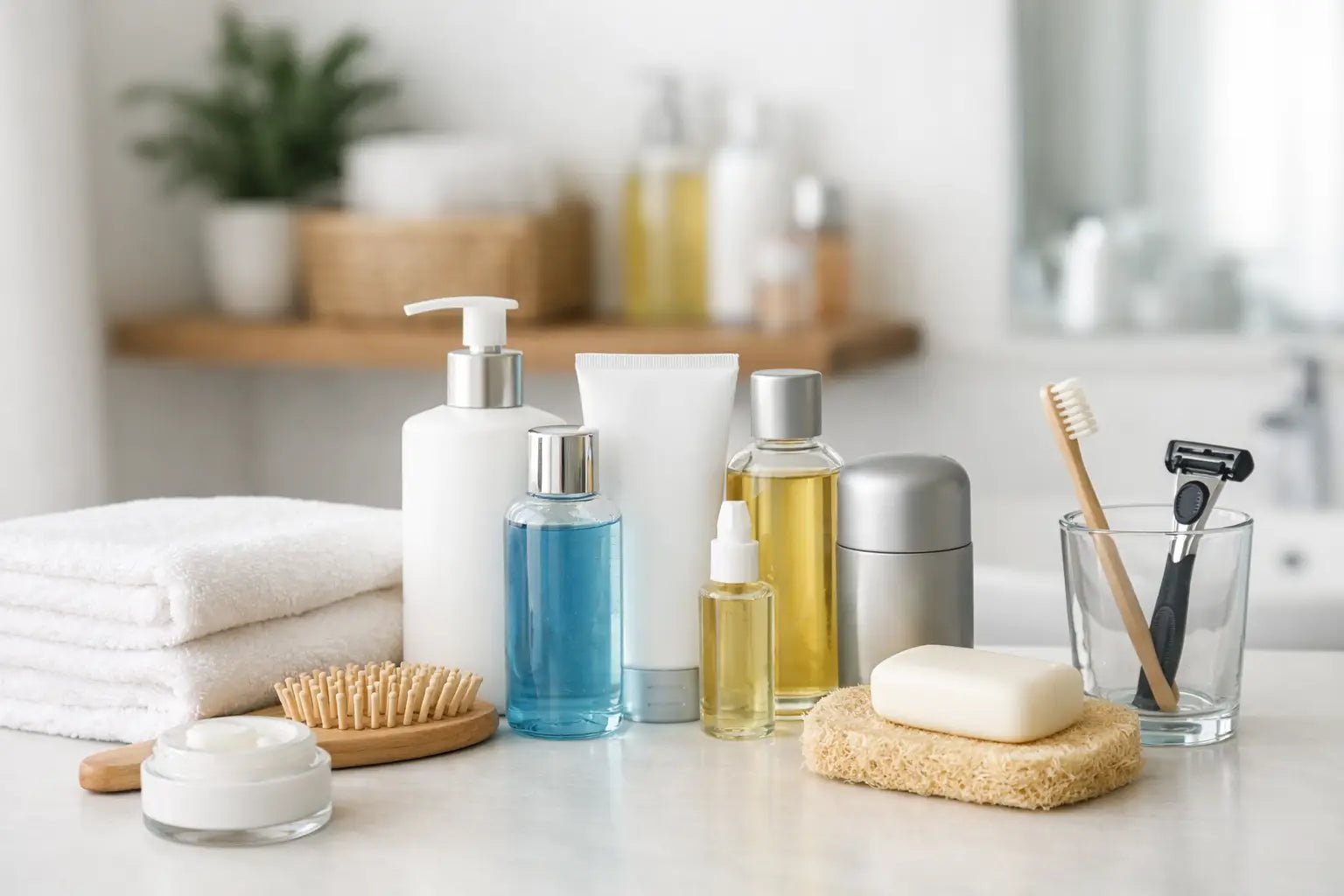
A nearly empty bathroom cupboard is most noticeable at the worst possible time: when the toothpaste runs out before school, a child has a grazed knee, or an overnight guest arrives. Knowing what toiletries should every household keep helps you buy the everyday basics in sensible quantities, avoid last-minute convenience prices and keep the home ready for normal life.
The aim is not to fill shelves with expensive brands or products that go unused. A practical toiletries cupboard covers daily hygiene first, then a few useful extras for minor mishaps, travel and visitors. Choose formats and quantities that suit the number of people in your home, and stock up when value packs offer a genuine saving.
What toiletries should every household keep for daily use?
Daily washing and oral care are the non-negotiables. Keep enough on hand that one finished bottle does not disrupt the morning routine, but do not overbuy items with fragrances or formulas that household members may not like.
Start with hand wash. One bottle by the bathroom basin and another in the kitchen are usually enough, with a refill or spare bottle in the cupboard. Bar soap can be a lower-cost alternative and stores well, particularly for guest bathrooms or occasional use.
Body wash, shower gel or soap should cover each regular user’s preference. Larger bottles may work out cheaper per wash, while smaller bottles are easier for children to handle and are less wasteful if someone changes their preferred scent. Shampoo and conditioner are best chosen for the people using them rather than buying a large selection. A simple family shampoo may be practical, but households with curly, colour-treated or sensitive hair may need separate products.
Oral care deserves a regular check. Keep toothbrushes, toothpaste, dental floss or interdental brushes, and mouthwash if your household uses it. Replace toothbrushes roughly every three months, or sooner after illness or when bristles are worn. Keeping a spare toothbrush or two prevents an unnecessary trip to the shops.
A useful everyday cupboard will usually include:
- Hand wash or soap, plus a refill or spare
- Shower gel, body wash or soap bars
- Shampoo and conditioner where needed
- Toothpaste, toothbrushes and floss or interdental brushes
- Deodorant suitable for each regular household member
- Toilet roll and tissues
Personal care items that prevent everyday scrambles
A few small products solve the everyday problems that otherwise send you searching through drawers. Keep cotton wool pads or balls, cotton buds used safely for external use only, nail clippers, a nail file, tweezers and a basic comb or hairbrush. A razor and replacement blades are useful for adults who shave, but buy them to suit the people in the household rather than assuming one type works for everyone.
Menstrual products should be available in the formats used at home, with a small reserve for unexpected starts or visitors. This is one area where running out can be particularly inconvenient, so check supplies before they are low rather than waiting until the final pack is opened.
For families with babies or young children, add nappy cream, baby wipes, gentle wash, nappies and any products used for their usual routine. Wipes are handy for quick clean-ups, but they should not be flushed, even when packaging suggests otherwise. A flannel and warm water are often the cheaper choice for regular washing.
Skin care does not have to mean a long routine. A basic moisturiser can help with dry hands and skin, especially in colder weather. Lip balm is useful in winter, while sun cream is worth keeping from spring onwards and for holidays, outdoor work or family days out. Check the expiry date and replace it when it has passed, as old sun protection may not perform as intended.
Keep a simple first-aid and medicine section
Toiletries and first aid are not exactly the same thing, but storing a small, clearly labelled first-aid kit near your essentials makes sense. It should be kept somewhere dry, out of children’s reach and easy for adults to find.
Include plasters in a range of sizes, sterile dressings, antiseptic wipes, medical tape, disposable gloves, a digital thermometer and a small pair of scissors. A cold pack can also be useful for minor bumps. Read product instructions and seek medical advice for serious injuries, deep cuts, burns, signs of infection, breathing difficulties or symptoms that are worrying or getting worse.
For medicines, keep only items your household uses safely and appropriately. This may include pain relief, oral rehydration sachets, indigestion treatment, allergy tablets or children’s medicines where suitable. Check labels, doses, age limits and expiry dates every few months. Never use prescription medicine intended for another person, and return unwanted or expired medicines to a pharmacy rather than putting them in household waste or down the sink.
Guest and travel toiletries worth having
A small guest supply is practical rather than luxurious. A spare toothbrush, toothpaste, soap, shampoo, a clean towel and sanitary products can make an unexpected stay far less awkward. Travel-size bottles are convenient, although full-size value products decanted into clearly labelled reusable bottles can be more economical for planned trips.
If family members travel regularly, keep a lightweight wash bag with a toothbrush, toothpaste, deodorant, mini shampoo and any other frequently used basics. Refill it after every trip. This avoids buying duplicates at the airport or discovering that a vital item was left in the bathroom.
How much should you buy at once?
The cheapest-looking pack is not always the best value. A bulk buy makes sense for products that every household member uses, that have a long shelf life and that you can store properly. Toilet roll, toothpaste, soap, hand wash refills and sanitary products usually fit this category.
Be more careful with products that are personal, seasonal or slow to use. Buying six bottles of a shampoo that only one person likes can be false economy. The same applies to sun cream, medicines and items with shorter expiry dates. Price per 100 ml, per 100 g or per item is a better comparison than the headline price, but only when you will use the whole pack.
A straightforward approach is to keep one spare of each core item, then add more only for high-use products. Families with several children may need a deeper supply of toothpaste, shampoo, tissues and plasters. A one-person flat may be better served by smaller packs that are easier to store and less likely to be forgotten at the back of a cupboard.
Store toiletries so you can actually use them
Keep daily products within easy reach, but store spare stock together in a cool, dry cupboard. Bathroom humidity can shorten the life of some products and damage cardboard packaging, so a hallway cupboard, bedroom drawer or utility area may be better for bulk supplies.
Put newer items behind older ones so the oldest gets used first. Once every month or two, take a minute to check toothpaste, deodorant, toilet roll, menstrual products and first-aid supplies. Add items to your regular grocery order before they become urgent. This small habit makes it easier to shop around for low prices rather than paying more because you need something immediately.
Honesty Sales makes it easier to combine everyday personal care, household basics and other routine essentials in one order, helping busy households spend less time chasing separate shops.
The best toiletries cupboard is not the biggest one. It is the one that has the basics your household genuinely uses, a few sensible spares, and enough order that everyone can find what they need without asking where it has gone.

