
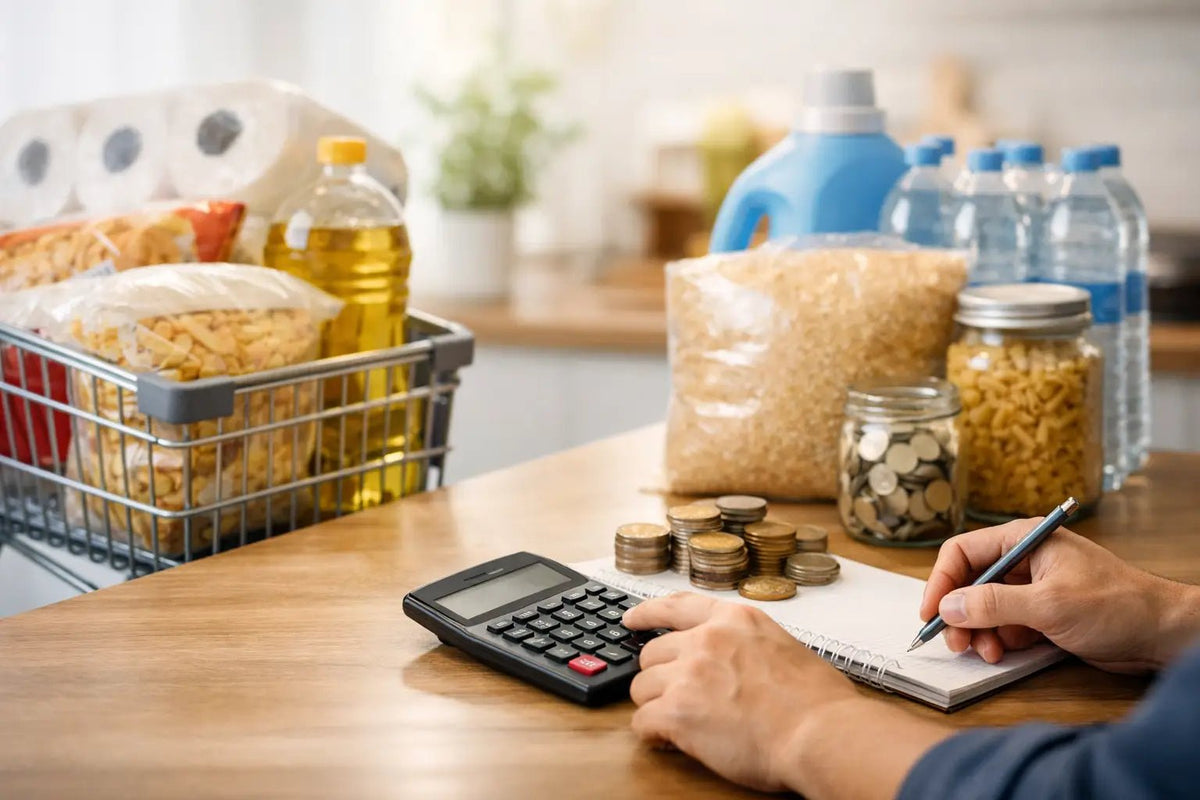
A 12-pack of cupboard staples can look like an obvious bargain. But when should you buy in bulk rather than buying only what you need this week? The answer is not simply when the unit price is lower. A bulk buy saves money only if your household uses it before it expires, you have room to store it and it does not push your weekly spending beyond what you can comfortably afford.
For many households, bulk shopping works best for the quiet essentials that disappear without much notice: toilet roll, washing-up liquid, tinned food, nappies, pet food and toiletries. It can be less useful for fresh food, unfamiliar products or anything likely to be forgotten at the back of a crowded cupboard.
When should you buy in bulk for real savings?
Start with the unit price, not the large number on the label. Compare the cost per item, 100g, kilogram, litre or wash. A bigger pack is not automatically better value, particularly when a promotion on a smaller size brings its unit price down.
Then ask one practical question: would you buy and use this amount anyway? If the answer is yes, buying more at a lower unit price can reduce the cost of routine shopping. If you are buying it only because the pack looks like a deal, it may become an expensive extra.
A bulk purchase makes sense when three things line up. The price is genuinely lower per unit, the product will be used in good time, and buying it will not leave you short for other essentials. That is the difference between stocking up and overspending.
Good bulk-buy candidates
Long-life, regularly used products are usually the safest choices. Think pasta, rice, tinned tomatoes, tea bags, coffee, UHT milk, cereal, bin bags, kitchen roll, cleaning sprays, soap, toothpaste and batteries. These items tend to have long shelf lives and are easy to rotate through.
Families may also save by buying larger quantities of nappies, wipes, baby toiletries and packed-lunch basics, provided the size, brand or formula is already known to suit. Pet owners can often make sensible savings on dry food, litter, treats and waste bags, as long as the food stays fresh once opened.
For small workplaces, catering supplies and cleaning essentials can be strong bulk-buy options too. Tea, coffee, cups, hand soap, toilet tissue and basic stationery are predictable costs where a sensible reserve can prevent last-minute, higher-priced purchases.
Check your usage before filling the basket
The easiest way to avoid waste is to base quantities on what you already use. Look at how quickly your household gets through an item over a normal month. If you use two jars of coffee every four weeks, a six-jar offer may be sensible if the best-before date is comfortably ahead. A 24-jar case may not be, even at a tempting price.
A simple calculation helps: divide the number of items in the pack by your normal weekly use. This tells you how long the supply should last. Compare that with the use-by or best-before date and with the storage space you have available.
Be more careful with products that can lose quality after opening. Large bags of flour, cereal, crisps, coffee and pet food need airtight storage to stay at their best. If you do not have suitable containers, the apparent saving may disappear through stale food or spills.
Use-by dates and best-before dates are different
Use-by dates relate to food safety. Do not bulk-buy chilled meat, dairy products, prepared foods or other short-life items unless you have a clear plan to use or freeze them safely before the date.
Best-before dates are about quality. Many cupboard foods remain usable after this date when stored properly, but flavour, texture or freshness may change. It is still sensible to buy quantities you will realistically use, rather than relying on a cupboard full of food you do not enjoy.
Frozen food can make bulk buying more flexible, particularly for family meals, vegetables, bread and batch cooking. Yet freezer space matters. Buying a large frozen pack is poor value if it forces you to waste other food or makes it difficult to find what you already have.
When bulk buying is usually the wrong move
A low price can create pressure to buy more than needed. Step back when the item is perishable, new to you, bulky to store or likely to be replaced by a better offer before you need it again.
Fresh fruit and vegetables can be excellent value in larger packs if you meal-plan and share them across several meals. Without a plan, they are among the most common sources of food waste. The same applies to bakery items, fresh herbs and large tubs of chilled products.
Avoid large quantities of a brand you have not tried before. Your household may dislike the taste, find a cleaning product too strong, or discover that a baby product does not suit. Buy a smaller size first. Once you know it works, a multipack becomes much less risky.
It also pays to avoid tying up too much money in one category. Saving a few pence per toilet roll is not helpful if it means putting off fresh groceries, household bills or a necessary purchase later in the week. Value is about the total shop, not one impressive deal.
Make storage part of the decision
Before adding a case, multipack or family-size product, picture where it will go. A dry, cool cupboard is ideal for many pantry products. Keep cleaning products away from food and out of reach of children. Store medicines, supplements and personal care items according to their labels, especially where heat or moisture could affect them.
Use the first-in, first-out rule. Put newer purchases behind the items already open or closest to their date, so older stock gets used first. This takes very little effort and prevents duplicate buying when packets are hidden at the back.
You do not need a huge pantry to buy in bulk well. One shelf, a cupboard box or a labelled basket for high-use essentials can be enough. The goal is a manageable reserve, not a store room full of products you cannot track.
A quick bulk-buy check at home
Before checking out, run through these five questions:
- Is the unit price lower than the smaller pack or your usual option?
- Will we use every item before its use-by date or while it is still in good condition?
- Do we have safe, dry or frozen storage space for it?
- Is this a product we already use regularly and know we like?
- Does this purchase fit our budget after the rest of this week's essentials?
Build a sensible household stock-up list
Rather than buying every deal you see, choose a short list of products that your household always needs. Review it before a larger shop and top up only when prices are good and your supply is running low. This approach can make shopping more predictable without creating clutter.
It helps to keep separate limits for food, household cleaning, toiletries and pet or baby essentials. That way, a strong deal in one area does not quietly take over your entire budget. Families with changing needs can adjust their list as children grow, routines change or storage space becomes tighter.
Shopping across everyday categories in one place can also make it easier to compare what is genuinely needed, from pantry staples and personal care to household basics. At Honesty Sales, the best value is often found by combining low prices with a clear list, rather than treating every multipack as a must-buy.
Share, split and plan ahead
Some bulk packs are simply too large for one household but work well when divided with family, friends or neighbours. This can be useful for long-life food, household paper, cleaning products and other sealed items. Agree the split and cost before buying, and only share products that remain unopened and appropriately stored.
Planning ahead also matters around school terms, holidays, busy work periods or a new baby. A small stock-up of the items you know you will need can save rushed trips and reduce the temptation to pay more at the last minute. Keep it focused on proven essentials, not speculative purchases.
The most useful bulk buy is the one that makes next week's shop easier without creating waste, clutter or pressure on your budget. Buy enough to feel prepared, leave room for the things that need buying fresh, and let the savings build through everyday habits.

