
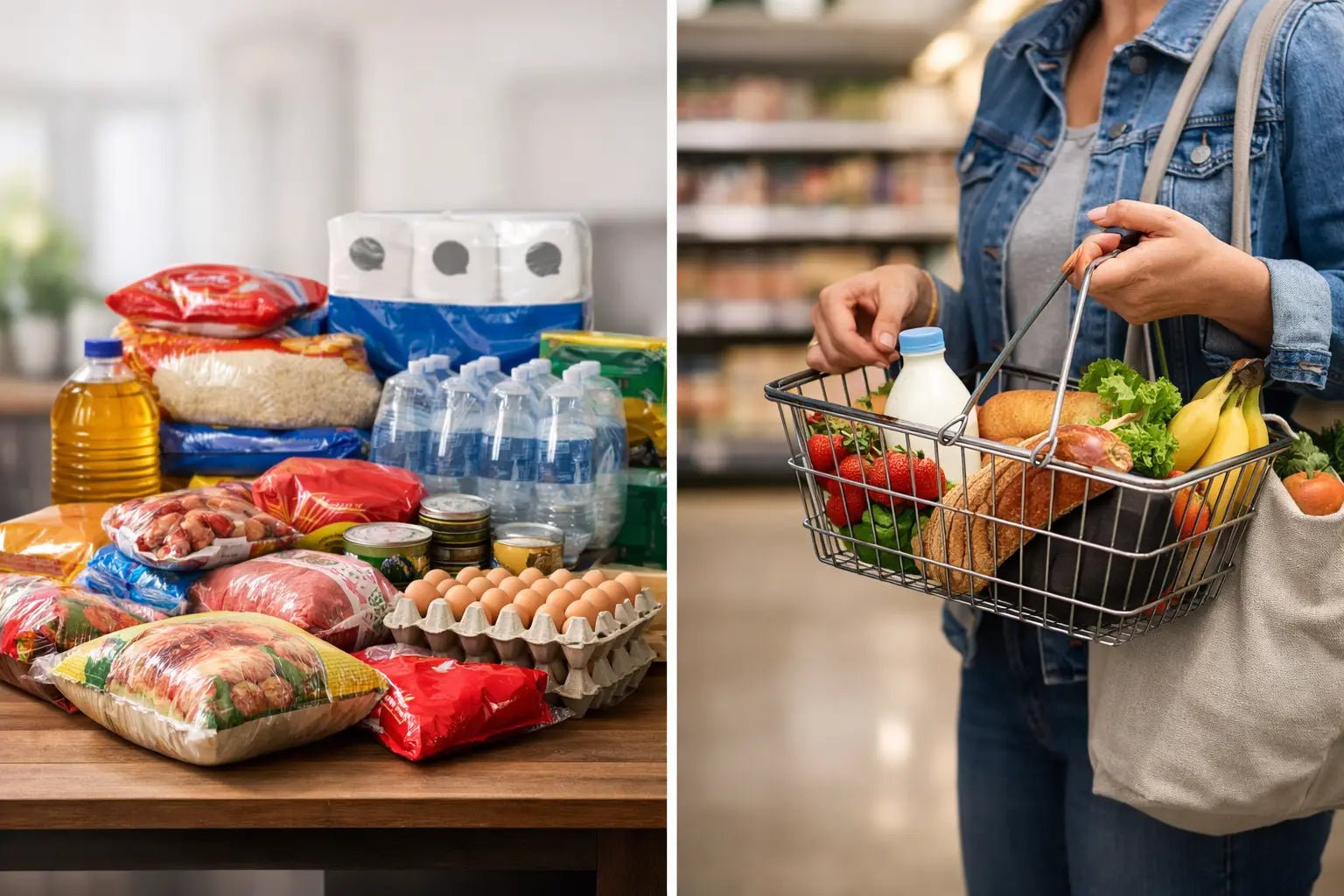
A £1 bargain is not a bargain if half of it goes out of date in the cupboard. Equally, popping out for one missing item can turn into a costly basket of extras. Bulk buying vs frequent top ups is less about picking one side and more about knowing which products suit each way of shopping.
For most households, the lowest-cost routine is a mix: buy dependable essentials in larger quantities when the price is right, then top up fresh food and short-life items as needed. That approach helps keep cupboards stocked without tying up too much money or filling the bin.
Bulk buying vs frequent top ups: the real difference
Bulk buying means purchasing a larger pack, multipack or several units at once. It can reduce the unit price, cut down the number of orders you place and make everyday routines easier. Think toilet roll, washing-up liquid, tinned tomatoes, pasta, nappies, pet food and long-life milk.
Frequent top ups mean buying smaller amounts more often. This works well for fresh fruit and vegetables, bread, chilled food, flowers, items you are trying for the first time and products your household uses unpredictably. A top-up shop can also help you respond to changes in plans, such as children eating at friends' houses or a weekend away.
The wrong choice is usually driven by the sticker price alone. A bigger pack is only better value if you will use it before it spoils, if you have somewhere sensible to keep it and if buying it does not leave too little money for the rest of the week's essentials.
When buying in bulk can save money
The clearest saving comes from non-perishable products you use regularly. If your household gets through the same tea bags, cereal, toothpaste or laundry capsules month after month, a larger pack can offer a lower cost per item. Checking the price per 100g, per litre or per unit makes comparisons much clearer than looking at the headline price.
Bulk shopping can also protect your budget from convenience purchases. When you have cupboard staples, household paper and personal care basics on hand, you are less likely to make an urgent last-minute shop at a higher price. It can be especially useful for busy families, carers, shared homes and small workplaces where certain essentials disappear quickly.
Delivery can be another practical reason to combine purchases. Planning a fuller order for items you genuinely need may reduce the time and effort spent placing several small orders. It also makes it easier to compare across grocery, cleaning, baby, pet and health and beauty essentials in one basket.
There is a cash-flow benefit too, but only for households that can comfortably afford the larger spend. Buying a month's supply of cleaning products may cost less overall, yet it is not helpful if it leaves the weekly food budget stretched. Value is about the full household budget, not just one discounted line.
Good products to buy in larger quantities
Start with products that are used steadily, have a long shelf life and are easy to store. Cupboard food such as rice, pasta, tinned beans, stock cubes and cooking oil can be sensible choices, provided you rotate what you already have. Household staples including bin bags, toilet roll, washing powder, batteries and cleaning cloths are also often reliable bulk buys.
For parents, nappies and wipes can be worth stocking up on when you know the right size and brand works. Pet owners may find larger packs of dry food and treats useful, as long as the food can be sealed properly and is eaten within its recommended period. Offices and trade buyers can use the same logic for tea, coffee, stationery, paper towels and basic safety supplies.
When frequent top ups are the smarter choice
Fresh food is where smaller, more regular shops often win. Buying a large amount of salad, soft fruit, bakery items or chilled ready meals can look good on paper, but any waste quickly removes the saving. If your household's routine changes from week to week, smaller quantities give you more control.
Top ups also make sense for products with a short use-by date or items that take up lots of room. A large pack of yoghurt is only good value if everyone likes it and it will be eaten. The same goes for bulky items that crowd out your fridge, freezer or kitchen cupboards.
Be careful with unfamiliar products. A promotional multipack of a new shampoo, snack or cleaning product can become expensive clutter if it is not right for your family. Try one first. Once you know it will be used, watch for a good larger-pack price.
Frequent top ups can help reduce food waste because you can buy around actual meal plans. Before adding fresh items to a basket, check what needs using first. A few meals built around ingredients already at home are usually cheaper than starting from scratch each time.
How to choose the best approach for each item
Use three quick checks before buying more than usual. First, ask how fast you use the item. A six-month supply of toothpaste may be sensible; a six-month supply of biscuits may disappear much faster than planned. Second, check the use-by or best-before date and consider whether the product can be frozen or stored safely. Third, make sure the unit price is genuinely lower.
It also helps to separate "stock-up items" from "weekly items". Stock-up items are predictable basics that you would buy anyway. Weekly items are fresh food, lunchbox additions and products based on the coming week's plans. Keeping these two groups separate stops a large deal from taking over the whole shopping budget.
Avoid buying extra simply because a product is on offer. A discount only saves money when it replaces a planned future purchase. If it creates a new purchase, it is still an extra cost. This is particularly relevant for seasonal treats, oversized snack packs and duplicate household products that get forgotten at the back of a cupboard.
A simple household stock list
You do not need a detailed spreadsheet to shop more carefully. A short list on your phone or a note on the fridge is enough. Keep track of the essentials your household gets through most often, the usual pack size and the point at which you need to buy again.
For example, you may decide to reorder toilet roll when there are two packs left, add coffee when one jar is unopened and replace washing-up liquid when the spare bottle is in use. This gives you time to compare pack sizes rather than buying whatever is available at the last minute.
Check storage before ordering. Dry goods need a cool, dry place, while freezer space is valuable and should not be filled with food nobody wants to eat. Put newer items behind older ones so you use the earliest dates first. This simple rotation is one of the easiest ways to make a bulk purchase pay off.
Build a lower-cost routine, not a larger cupboard
A practical routine might involve one planned order for household staples and long-life groceries, followed by smaller fresh-food top ups during the week. The exact timing depends on your household size, pay schedule, storage and how often you cook at home. A family of five will have very different needs from one person in a flat, and both can shop well on a budget.
Review your routine after a few weeks. If you are repeatedly running out of essentials, add those products to your regular stock-up list. If you are throwing away fresh food or finding unopened duplicates, reduce the pack size or buy less often. Small adjustments matter more than chasing every deal.
Honesty Sales makes it easier to bring together everyday groceries, household basics, baby products, personal care and more in one planned shop. The best basket is not necessarily the biggest one. It is the one that fits your budget, your storage and the way your household actually lives.
Choose larger packs for the things you trust, use and can store. Keep fresh purchases flexible, buy with a plan and let genuine value - not urgency - guide the next top up.

