
A wet entrance, a poorly lit stockroom or one missing pair of gloves can turn an ordinary shift into an avoidable problem. This guide to workplace safety supplies helps small businesses, site managers and practical buyers cover everyday risks without filling the cupboard with costly items nobody uses.
The right supplies depend on the work being done, the people doing it and the setting. A café kitchen, warehouse, office, care setting and construction site do not need the same kit. Start with the hazards in front of you, then buy practical equipment that staff can access, understand and replace easily.
Start with the risks, not the product list
Safety supplies work best when they follow a simple risk assessment. Walk through a normal working day and look at where people could slip, cut themselves, strain a muscle, come into contact with cleaning chemicals, or be missed by moving vehicles. Include visitors, delivery drivers, temporary workers and anyone working alone.
Think about routine tasks as well as unusual ones. A warehouse may need high-visibility clothing for yard work, but it may also need floor-marking tape, spill-control materials and safety cutters for unpacking deliveries. An office may appear low risk, yet trailing cables, first-aid cover and safe access to high shelves still need attention.
Avoid buying supplies simply because they look comprehensive. Equipment that does not suit the job is wasted spend and can create false confidence. If a task involves a specific chemical, for example, check the product information and safety data before selecting gloves or eye protection. When the risks are complex, seek competent health and safety advice rather than guessing.
A guide to workplace safety supplies by need
For most workplaces, safety buying falls into a few useful groups. Keeping them organised makes it easier to spot gaps and reorder everyday items before they run out.
Personal protective equipment
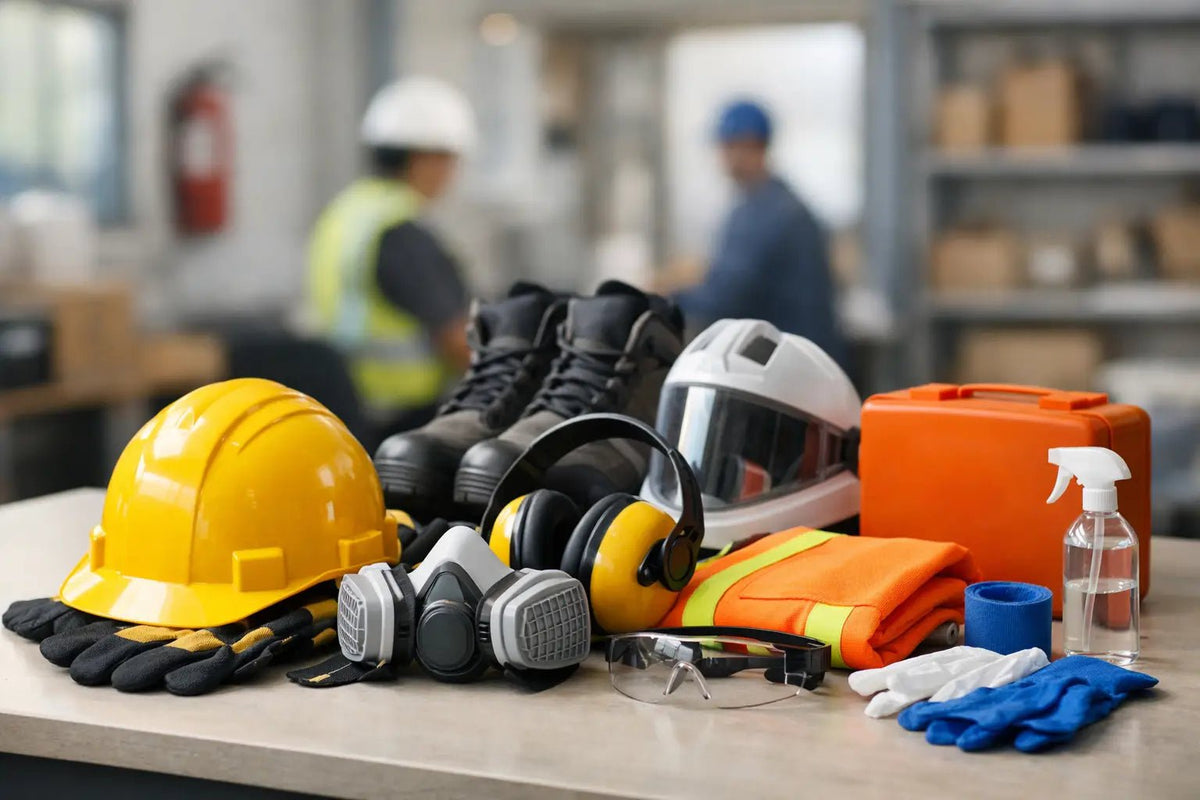
Personal protective equipment, usually called PPE, is often the most visible part of workplace safety. It can include disposable or reusable gloves, safety glasses, face shields, hearing protection, hard hats, high-visibility vests, protective footwear and respirators.
PPE should be the last line of protection, not the only control. If a floor is slippery, cleaning it quickly and putting up a warning sign is better than expecting staff to rely on slip-resistant shoes alone. If a machine can be guarded or a noisy task can be separated from others, do that before issuing extra protective gear.
Fit matters as much as the product type. Gloves that are too large reduce grip, while ill-fitting eye protection may leave gaps or be left in a drawer. Offer suitable sizes, keep replacement stock available and make sure workers know when equipment needs cleaning, checking or disposal. Reusable PPE can reduce ongoing costs, but only when it can be maintained hygienically and reliably.
First-aid and emergency supplies
Every workplace should have first-aid arrangements that match its level of risk, workforce size and location. A basic first-aid kit may be enough for a small low-risk office, while a busy kitchen, warehouse or trade site may need additional dressings, burn treatments, eyewash or trauma supplies based on its assessment.
Place kits where people can reach them quickly, not in a locked cupboard known only to one manager. Clearly marked first-aid signs help new starters and visitors find help. Check expiry dates, replace used items promptly and record what has been taken, especially after an incident.
Emergency supplies deserve the same attention. Depending on the site, this can include fire blankets, suitable extinguishers, fire door signs, emergency lighting accessories, escape-route signage and high-visibility torches. These items need proper placement and regular checks. Buying them is only the first step.
Signs, barriers and clear communication
A clear warning can prevent a person walking into a hazard they did not know was there. Safety signs are particularly useful around wet floors, restricted areas, forklifts, fire exits, electrical equipment, chemicals and mandatory PPE zones.
Use signs that are easy to read from the distance at which people will see them. Permanent hazards need durable, fixed signage. Temporary work, cleaning and deliveries often call for folding floor signs, cones, barrier tape or portable barriers that can be put out and removed quickly.
Do not let signs become background noise. Too many notices, especially outdated ones, make important warnings easier to ignore. Review them after layout changes, new equipment or changes in work processes. Keep walkways, exits and fire points visible at all times.
Cleaning, spill and hygiene control
Cleaning supplies are safety supplies when they help prevent slips, contamination and exposure to harmful substances. This includes absorbent pads, spill kits, mop heads, warning signs, hand soap, disposable cloths and suitable bins for waste.
Choose products for the materials and liquids used on site. A general spill kit may be suitable for water-based liquids, while oil, fuel or chemical spills can require more specialised absorbents and disposal arrangements. Store spill materials close to the likely risk, such as near loading areas, kitchens or cleaning stores, rather than at the other end of the building.
Label cleaning products clearly and keep them in their original containers wherever possible. Never decant chemicals into unmarked bottles. Staff should know which products must not be mixed and what protective equipment is required for each task.
Manual handling and storage safety
Back injuries often come from ordinary jobs repeated over time: moving boxes, reaching for stock, lifting deliveries or twisting in cramped storage areas. Manual handling supplies can reduce strain when they are paired with sensible work methods.
Trolleys, sack trucks, step stools, pallet wrap, storage labels and shelving accessories can make a meaningful difference. The cheapest option is not always the best value if it is awkward to use, unsuitable for the load or likely to fail under daily use. Check load limits and choose equipment that fits through your doorways, aisles and lifts.
Good storage also prevents falling objects and blocked routes. Keep heavier items lower down, avoid overloading shelving and make sure staff can reach stock without climbing on chairs or boxes. A stable set of steps with a handrail is a small purchase that can prevent a serious fall.
Buy for everyday use and easy replacement
A sensible safety budget focuses on the supplies used most often, then keeps critical backup items in reserve. This usually means maintaining stock of gloves, plasters, eyewash, disposable masks where required, warning signs, batteries, cleaning materials and high-visibility wear. Set minimum stock levels so the person responsible knows when to reorder.
For small businesses, it is often more affordable to buy practical multipacks of consumables while choosing durable versions of frequently used equipment such as trolleys, barriers and reusable eye protection. There is a trade-off: bulk buying lowers the unit price, but only if items will be stored properly and used before they deteriorate or go out of date.
Keep a simple checklist with the item, location, quantity, condition and next review date. A monthly check may suit low-risk premises, while busy sites may need weekly checks for first-aid supplies, spill stations and PPE. Assign ownership to a named person, but make sure cover is available during holidays and absences.
Train people to use what you provide
Safety supplies cannot do their job if people do not know where they are or how to use them. Brief new starters on first-aid locations, fire routes, spill procedures, PPE requirements and who to tell when an item is damaged or running low.
Short, practical reminders are usually more useful than a one-off folder of policies. Show staff how to adjust a hard hat, inspect a pair of gloves, use a trolley safely or put out a wet-floor sign. Ask for feedback too. The people doing the task will often spot that a glove tears too easily, a sign is stored too far away or a trolley is difficult to manoeuvre.
For value-led workplace buying, look for useful basics that support the way your team actually works. Honesty Sales brings practical workplace essentials together with everyday business and household supplies, helping busy buyers keep routine orders straightforward.
The best safety cupboard is not the biggest one. It is the one with the right, usable supplies in the right places, checked often and backed by staff who are confident enough to act before a small hazard becomes an accident.

