
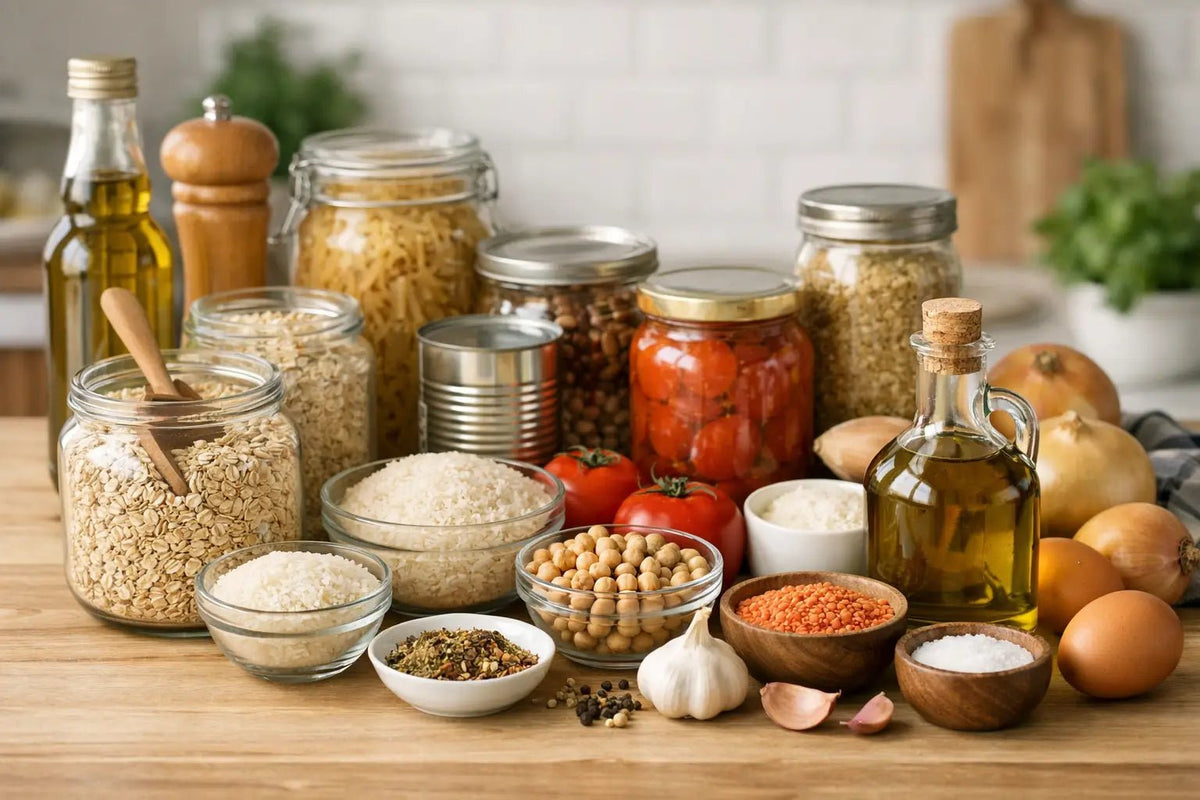
A well-planned pantry staples list can make the difference between an expensive last-minute food shop and a filling meal made from what you already have. The aim is not to fill cupboards with products that sit unused. It is to keep versatile, good-value foods on hand so breakfast, packed lunches and family dinners are easier to manage.
For most households, the best staples are familiar foods that stretch across several meals. A tin of chopped tomatoes can become pasta sauce, soup or a curry base. Oats can cover breakfast, baking and simple snacks. Choosing items you genuinely use is where the savings start.
What belongs on a pantry staples list?
A pantry staple is a shelf-stable food you use regularly and can store safely for weeks or months. It should be practical, affordable and flexible enough to work with fresh, chilled or frozen ingredients. Cupboard foods do not need to be boring, either. Herbs, spices, sauces and a few reliable treats can turn basic ingredients into meals people want to eat.
The right list depends on your household. A family with young children may get through cereal, pasta, baked beans and long-life milk quickly. Someone cooking for one may prefer smaller packs, tinned fish, rice and soup ingredients to avoid waste. If you follow a vegetarian, vegan, halal or gluten-free diet, build your cupboard around the versions you already buy rather than copying a generic list.
The core pantry staples list
Carbohydrates for filling meals
Start with the foods that make meals go further. Dried pasta, rice, noodles, couscous and oats are inexpensive cupboard basics with a long shelf life. Keep a mix if you use them, but there is no need to buy every variety at once. One or two types of pasta, a bag of rice and a pack of porridge oats cover plenty of ground.
Flour is useful for pancakes, sauces, simple baking and homemade flatbreads. Add sugar, baking powder and a packet of yeast if baking is part of your routine. Crackers, crispbreads and cereal are handy for quick breakfasts and light lunches, although it is worth checking dates and rotating them often so they stay fresh.
Potatoes are usually stored outside the pantry, in a cool dark place, but they deserve a place in your meal plan. They are filling, low-cost and work with beans, eggs, tinned fish, cheese and leftover vegetables.
Tins and jars that save busy evenings
Tinned and jarred foods are some of the most useful value buys because they reduce preparation time and waste. Chopped tomatoes, passata and tomato purée form the base for many low-cost dishes. Tinned beans, chickpeas and lentils add protein to chilli, curry, soup, wraps and salads.
Keep a selection that suits your usual cooking, such as:
- baked beans, kidney beans, cannellini beans and chickpeas
- chopped tomatoes, passata and tomato purée
- sweetcorn, peas, carrots or mixed vegetables
- tuna, sardines or mackerel
- soup, stock cubes and gravy granules
- fruit in juice for pudding, porridge or packed lunches
Cooking oils, seasonings and sauces
Basic ingredients taste better when you can season them properly. Cooking oil, salt, black pepper and stock cubes are the starting point. From there, add the flavours you use most often rather than buying a full spice rack for the sake of it.
For many UK households, dried mixed herbs, oregano, curry powder, paprika, garlic granules and chilli flakes offer plenty of variety. Soy sauce, vinegar, ketchup, brown sauce and a jar of curry paste can also make everyday meals quicker. Lemon juice in a bottle is useful for dressings and cooking when fresh lemons are not on hand.
These products can look small, but they prevent bland meals and help you use up other ingredients. Leftover vegetables, rice and eggs become a fried rice-style supper with a little oil, soy sauce and seasoning. Pasta, tomatoes and herbs become a straightforward sauce without a separate jarred meal sauce.
Baking and breakfast basics
Breakfast is one of the easiest meals to organise from the cupboard. Porridge oats, cereal, long-life milk, tea, coffee and spreads can stop the morning rush turning into an extra shop. Peanut butter, jam and honey keep well and work on toast, sandwiches and porridge.
If you bake occasionally, keep only the essentials: plain flour, self-raising flour, sugar, cocoa powder and baking powder. These can make cakes, biscuits, Yorkshire puddings and quick snacks without specialist ingredients. For regular bakers, vanilla flavouring, dried fruit and chocolate chips are sensible extras when bought at a good price.
Useful extras for lunches and snacks
A few cupboard items make packed lunches and snack times easier. Rice cakes, crackers, popcorn kernels, dried fruit and nuts can be useful, but portion sizes matter because these products can disappear quickly. Keep an eye on allergies in the home and choose suitable alternatives where needed.
UHT milk, tea bags, coffee and hot chocolate are worth holding as backup, especially for larger households or when visitors call. A small supply of biscuits or a favourite treat can be practical too. Budgeting does not mean removing every enjoyable item from the food shop.
Build your cupboard around meals, not random offers
Low prices are useful only when the product will be used. Before adding a multipack to your trolley, think of two or three meals you can make with it. A larger pack of pasta may offer better value per kilogram, but not if it takes a year to finish or crowds out foods you need more often.
Try making a short list of meals your household repeats. Perhaps that is spaghetti Bolognese, bean chilli, tuna pasta, jacket potatoes, soups, curries and porridge. Then identify the cupboard ingredients that support those meals. This keeps your shop focused and makes it easier to spot a genuine deal.
At Honesty Sales, shoppers can combine grocery basics with everyday household needs in one order, which can help reduce the need for separate top-up shops. The most useful approach is still to check what is already in the cupboard first, then buy to replace rather than duplicate.
How much should you keep?
There is a balance between being prepared and overstocking. A sensible starting point is enough core food for around one to two weeks of ordinary meals, plus a few backup options for busy days. If you have a large family, limited transport, irregular work hours or live some distance from shops, keeping more may make sense.
Avoid treating pantry shopping as emergency stockpiling. Food still has best-before dates, cupboards have limited space and money tied up in unused products is not a saving. Buy extra when it is a product you use often, the price is genuinely lower and you can store it properly.
A simple rule works well: keep one in use and one spare for your most-used staples. When you open the spare, add it to the next shop. This works for pasta, rice, tinned tomatoes, beans, cereal, tea bags and toilet roll without creating an overloaded cupboard.
Store staples so they do not go to waste
Good storage protects the value of your food shop. Keep dry goods cool and dry, away from direct sunlight and heat from the cooker. Seal flour, cereal, rice and pasta in airtight containers if pests or damp are a concern. Clear labels with the product name and best-before date are especially helpful if you decant foods from their packets.
Use the first-in, first-out method. Put new items behind older ones so the food with the nearest date gets used first. Once a month, spend five minutes checking the cupboard and plan one meal around anything nearing its best-before date. Most best-before dates relate to quality rather than safety, but always check packaging instructions and use your judgement.
Tins should be stored dry and should not be used if they are badly dented, leaking, swollen or damaged. Once opened, move unused tinned food into a covered container, refrigerate it and use it promptly.
A practical reset for your next food shop
If your cupboards are bare, do not feel you need to buy everything on this pantry staples list in one go. Start with a few meal bases: pasta or rice, tinned tomatoes, beans, oats, cooking oil, stock cubes and seasonings. Add items over several shops as your budget allows.
The best pantry is not the fullest one. It is the one that helps you make affordable meals with less waste, fewer rushed decisions and a little more breathing room when the week gets busy.

