
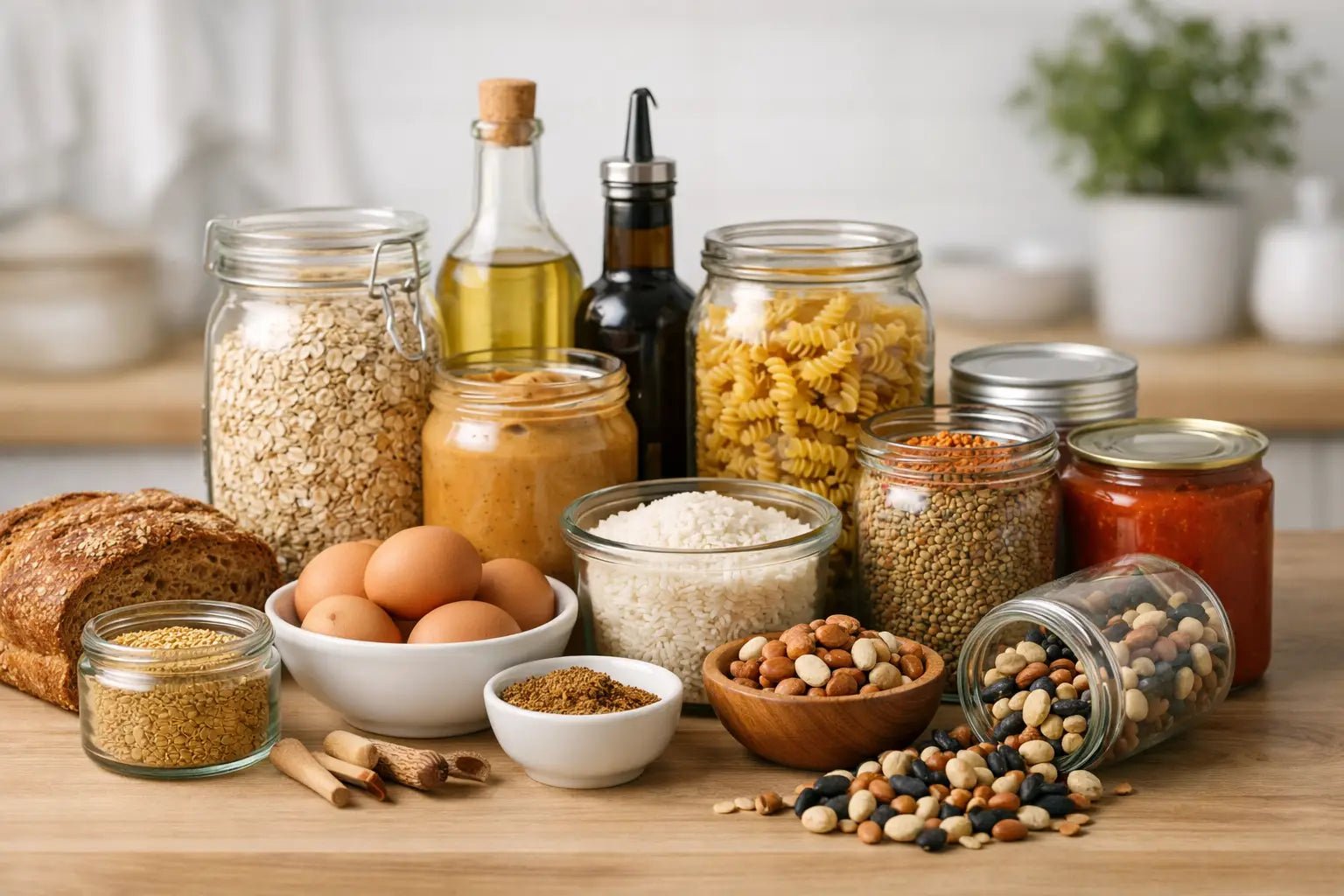
A nearly empty cupboard can turn an ordinary Tuesday into an expensive takeaway night. Keeping the best affordable pantry staples to hand makes everyday meals easier to plan, quicker to cook and kinder to the weekly food budget. The aim is not to fill every shelf with food you may never use. It is to build a practical base that works for your household.
Prices, pack sizes and offers change, so the best choice is not always the cheapest item on the shelf. Look at the unit price, choose products your family will genuinely eat and use your cupboard to reduce waste. A few dependable staples can stretch fresh ingredients, rescue a last-minute meal and make packed lunches less of a chore.
The best affordable pantry staples to buy first
1. Rice
Rice is one of the most useful value foods to keep at home. Long-grain rice works with curries, chilli, stir-fries and simple bowls made from leftover vegetables. Basmati can be worth choosing if it is a family favourite, but standard long-grain rice is often the more affordable everyday option.
Buy a pack size you can store in a dry, sealed container. Larger bags may offer better value per kilogram, but only if you will use them before quality drops or cupboard pests become a problem.
2. Pasta
Dried pasta is inexpensive, filling and has a long shelf life. Spaghetti, penne and fusilli are enough for most households, although there is no harm in buying whatever shape is on offer. Pasta is especially good for meals where a small amount of meat, cheese or vegetables needs to feed more people.
Keep a jar of pasta sauce or chopped tomatoes nearby and you have the beginning of a quick tea. Wholewheat pasta can add more fibre, but regular dried pasta is a sensible budget choice if that is what everyone will eat.
3. Tinned tomatoes
Tinned chopped tomatoes are a low-cost building block for pasta sauces, soups, curries, casseroles and chilli. They are often better value than buying fresh tomatoes specifically for cooking, particularly when tomatoes are out of season.
Choose plain tins rather than heavily flavoured varieties if you want flexibility. Add dried herbs, garlic, stock, lentils or beans to make the flavour your own. Tomato purée is also worth keeping for adding depth to a sauce without opening another tin.
4. Tinned beans and pulses
Baked beans are a British cupboard classic for good reason, but kidney beans, chickpeas, butter beans and lentils deserve space too. They provide affordable protein and can make meat go further in shepherd's pie, chilli, stew and curry.
Tinned pulses are convenient because they are ready to use after draining and rinsing. Dried lentils are usually cheaper per serving and cook quickly, especially red lentils, but they suit shoppers who have a little more time. Keep both if your budget and storage allow.
5. Porridge oats
Porridge oats are one of the strongest value buys in the cupboard. A bag can cover many breakfasts, and oats can also be used in flapjacks, crumble toppings and homemade burgers. Served with milk, fruit or a spoonful of peanut butter, porridge is filling without relying on costly single-serve breakfast products.
Avoid buying a large bag simply because it looks like a bargain if nobody in the household enjoys oats. An affordable staple only saves money when it gets eaten.
6. Flour
Plain flour and self-raising flour are useful for more than baking. Plain flour thickens gravies and sauces, while self-raising flour makes quick scones, pancakes and simple traybakes. If you bake regularly, flour can help replace pricier snacks and desserts with homemade alternatives.
For occasional bakers, start with one bag that matches what you make most often. Flour lasts well when kept cool and dry, but it is not a reason to buy cupboards full of ingredients for recipes you will never repeat.
7. Cooking oil
A basic vegetable or rapeseed oil is a practical everyday choice for frying, roasting and baking. Olive oil has its place, especially for dressings and certain dishes, but it is not essential for every meal. Choosing a versatile cooking oil can keep costs down without making your food feel limited.
Use oil carefully rather than pouring freely. It is easy to waste, and a measured spoonful is often enough for a pan of vegetables or a tray of roast potatoes.
8. Stock cubes or stock pots
Stock adds flavour to rice, soups, gravies, casseroles and sauces for very little cost per portion. Vegetable stock is the most versatile option for many cupboards, while chicken or beef stock can suit households that use them often.
Check salt levels if that matters for your diet and remember that stock is a flavour helper, not a meal on its own. It is particularly handy when using budget vegetables, tinned beans or leftovers that need a lift.
9. Dried herbs and spices
You do not need a huge spice rack to make economical meals taste good. Start with mixed herbs, oregano, curry powder, paprika, cinnamon and black pepper. These cover a wide range of everyday cooking, from tomato pasta to curries and porridge.
Buy smaller packs if you use spices rarely. Bigger containers can be better value, but old spices lose flavour, which makes a meal less satisfying and can lead to more seasoning being used than needed.
10. Peanut butter
Peanut butter is filling, stores well and works for breakfasts, sandwiches, toast and baking. It can also add richness to sauces and curries. Choose smooth or crunchy based on preference, and compare labels if you want a version with fewer added ingredients.
It is calorie-dense, so it is best used as part of a balanced meal rather than treated as a replacement for every protein source. For households with nut allergies, sunflower seed spread may be a more suitable alternative.
11. UHT milk or long-life plant drinks
Long-life milk is useful as a back-up for tea, cereal, cooking and baking when fresh milk has run out. It is not for everyone, and some households prefer the taste of fresh milk, but an unopened carton can prevent an unnecessary trip to the shops.
Long-life plant drinks can offer the same convenience for households that use oat, soya or other alternatives. Check whether the product is fortified if you rely on it as a regular milk substitute.
12. Tea bags, coffee and a simple sweet treat
A hot drink is a small household essential that can make a difference to the daily budget. Keeping tea bags or coffee at home reduces the temptation to buy drinks while out. A pack of biscuits, dark chocolate or plain crackers can also stop a minor snack craving becoming a costly convenience-shop visit.
The key is keeping treats modest and familiar. Buying several multipacks because they are on offer can cost more than planned if they disappear in a few days.
How to make affordable pantry staples work harder
The most economical cupboard is organised around meals your household already enjoys. Think of a few flexible combinations: pasta, tomatoes and beans; rice, lentils and curry seasoning; oats, milk and fruit. These are not strict recipes, but dependable starting points when the fridge is low.
Pair cupboard goods with frozen vegetables where possible. Frozen peas, sweetcorn, mixed vegetables and berries can reduce waste because you use only what you need. Fresh carrots, onions and potatoes also tend to be good-value partners for pantry foods, although the best buys will vary by season and local offers.
Before shopping, check what is already open. A duplicate bag of rice is rarely a problem, but forgotten jars, sauces and spices soon add clutter. Rotate newer items behind older ones, keep packets sealed and write a short list based on meals rather than buying random bargains.
Smart ways to save without compromising on food
Own-brand pantry items can offer excellent value, but branded products may be worth it when there is a clear difference your family notices. For example, a favourite tea bag or baked bean may prevent food from being left unused. The goal is an honest balance between price and practicality.
Compare shelf prices by weight or volume, especially for rice, pasta, oil and cereal. Multi-buy offers are only savings when you need every item and have room to store it. A lower-priced pack can be the wiser purchase if cash is tight this week, even when a larger pack costs less per kilogram.
Shopping across groceries and household essentials in one order can also make routine buying simpler. At Honesty Sales, value-focused shoppers can stock up on everyday food alongside practical home needs, helping reduce the number of separate shops to manage.
A well-stocked cupboard is not about buying more. It is about having the right few ingredients ready when you need them, so a simple, affordable meal is always within reach.

