
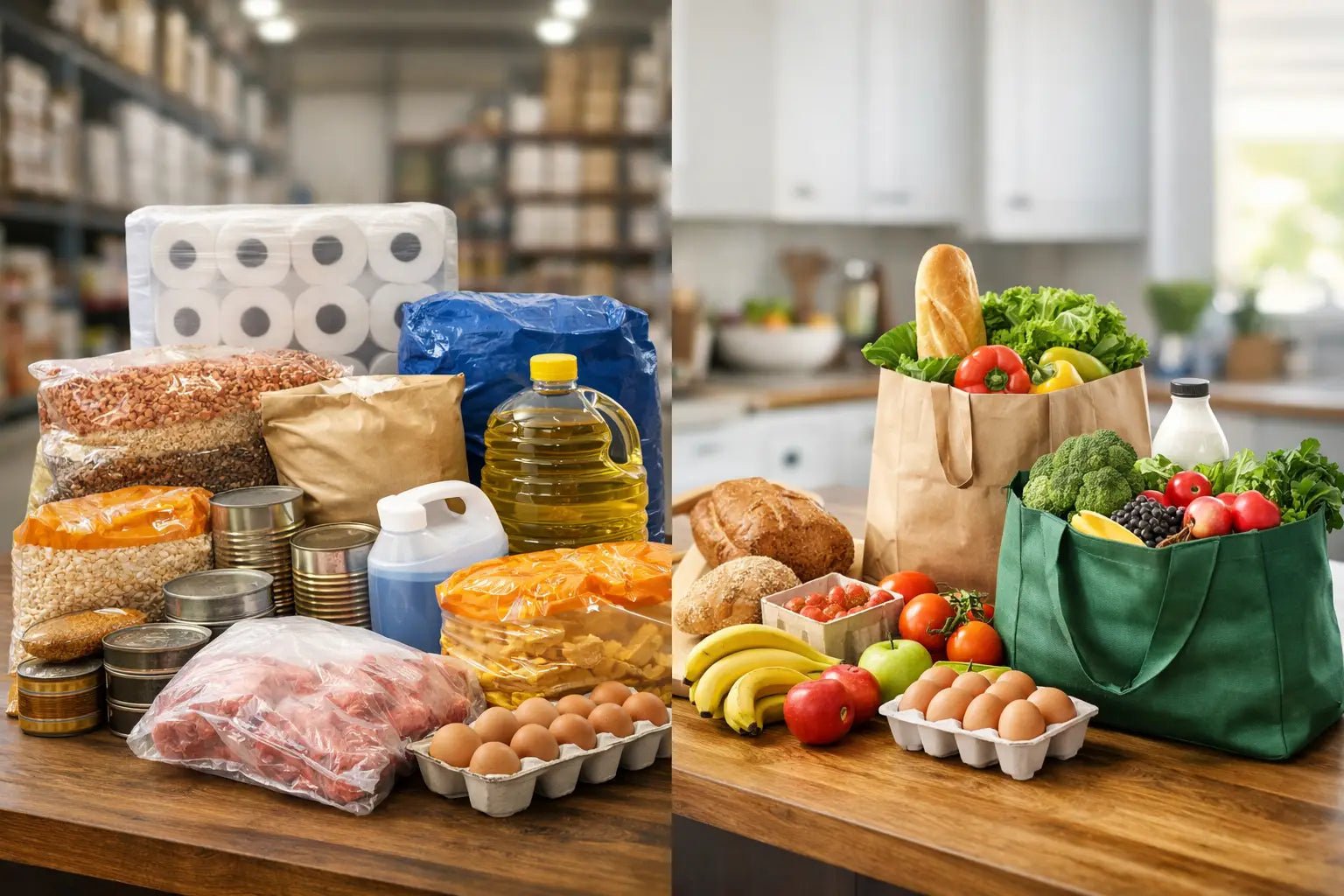
One week it is a quick top-up of milk, bread and loo roll. The next, it is a larger order that should last the month. That is why bulk buying versus weekly shopping is not just a budgeting question. It is really about how your household uses food, stores essentials and manages day-to-day costs without wasting money.
For some homes, buying in bulk cuts the price per item and reduces the number of orders to place. For others, weekly shopping keeps spending tighter and helps avoid cupboards full of things nobody uses. The better option depends on your routine, your storage space and what you are actually buying.
Bulk buying versus weekly shopping: what changes most?
The biggest difference is not only how often you shop. It is how you spread your spending, how much flexibility you keep and how likely you are to use what you buy.
Bulk buying usually works best for products with a long shelf life or steady use. Think pasta, rice, tinned food, toiletries, nappies, cleaning products, pet food and household paper. If your household gets through these items every week, larger packs can make good financial sense.
Weekly shopping suits products that turn over quickly, vary by week or spoil easily. Fresh fruit, salad, bread, dairy and short-dated chilled items are the obvious examples. It also works well if your meals change often or if you prefer to buy around offers and what you actually need that week.
In plain terms, bulk buying favours predictability. Weekly shopping favours control.
When bulk buying saves more
Bulk buying can bring real savings, but only when the price per unit is lower and the products get used before they expire. That sounds simple, yet it is where many households get caught out.
A larger pack is not automatically a better deal. The saving only matters if you would have bought that quantity anyway. If a family uses washing powder, toothpaste or cereal every week, stocking up during a good offer can reduce the average cost over time. The same goes for freezer-friendly food, cupboard staples and baby essentials.
There is also a convenience saving that matters to busy households. Fewer repeat purchases mean fewer urgent top-up shops, fewer delivery bookings to remember and less chance of paying more because you have run out and need something immediately. That can be especially helpful when you are buying across multiple categories such as groceries, toiletries, cleaning products and pet care in one go.
Bulk buying often suits larger families, shared households and anyone with a regular usage pattern. It can also work well for small workplaces, childminders or people caring for others, where repeat buying is part of the weekly routine rather than an occasional spend.
When weekly shopping makes more sense
Weekly shopping is often the smarter option for households trying to keep cash flow under control. A big stock-up can look efficient, but it still means spending more upfront. If that leaves little room for the rest of the month, the savings on paper may not help in practice.
It also reduces waste. Fresh produce, bakery items and chilled foods are easier to manage in smaller amounts. Buying weekly lets you adjust to changes in plans, whether that is eating out, children being away, a shift in work hours or simply not fancying the meals you planned seven days earlier.
There is another benefit that often gets overlooked. Weekly shopping makes it easier to notice where money is going. If you review your basket regularly, it is simpler to trim extras, swap brands or pause non-essentials. For households trying to budget closely, that visibility matters.
Weekly shopping tends to suit smaller homes, people with limited storage and anyone whose routine changes often. It is also practical if you rely heavily on fresh food and prefer not to freeze large portions.
Cost is only part of the bulk buying versus weekly shopping decision
Most people start with price, but cost alone does not settle the issue. You also need to consider waste, storage and the chance of overbuying.
If you buy a large multipack of snacks because the unit price is lower, but half of it gets eaten faster than usual simply because it is there, the saving disappears. The same applies to fresh food bought in larger quantities than the household can realistically use. Cheap food thrown away is not cheap.
Storage matters too. Bulk buying works best when you have room to keep products properly. Dry goods need clean, dry cupboard space. Frozen food needs freezer capacity. Household essentials need somewhere accessible, otherwise you risk buying duplicates because you cannot see what you already have.
Then there is substitution. If you stock up too heavily on one product, you may miss better offers later or end up locked into items that are not your first choice. Weekly shopping gives you more flexibility. Bulk buying gives you more certainty. Neither is right all the time.
The best approach for most households
For many GB households, the most practical answer is not choosing one side. It is mixing both.
Buy in bulk for the essentials you use consistently and store easily. Shop weekly for fresh items and anything that changes with your plans. That gives you the savings of larger packs without filling the kitchen with food that may not get used.
A simple way to think about it is by category. Toiletries, laundry products, toilet tissue, tinned goods, pasta, rice, tea, coffee, long-life milk, nappies and pet supplies are often better bulk buys. Fresh vegetables, fruit, bread, chilled meats and ready meals are usually better as weekly purchases unless you know exactly how they will be used.
This blended approach also suits online shopping well. A larger essentials order can cover the core items that keep the house running, while smaller weekly top-ups handle the shorter-life products. For shoppers who want low prices and less hassle, that balance is often the most realistic.
How to decide what your home should do
Start with usage, not offers. Look at what your household finishes every month without fail. Those are your best candidates for bulk buying. If you replace the same item regularly and have space to store it, there is a good chance a larger pack or multi-buy will work in your favour.
Then look at waste. Anything that often gets binned, forgotten at the back of a cupboard or left in the fridge past its date should stay on a weekly list. The same applies to products your family uses unpredictably.
It also helps to separate true essentials from tempting extras. Bulk buying should be for dependable staples, not for items that only seem like a bargain because the pack is bigger. That distinction protects the budget better than any single deal.
If you are trying to cut costs, keep a rough note of unit prices on the items you buy most often. You do not need a complicated spreadsheet. Just compare enough to know when a larger size is genuinely cheaper and when it is only packaged to look that way.
Bulk buying versus weekly shopping for different households
A larger family will usually benefit more from bulk buying than a single adult in a small flat. Higher usage means products move quickly, so the risk of waste is lower. Parents buying nappies, cereal, juice, toiletries and packed lunch staples often see the most value in stocking up.
A one or two-person household may find weekly shopping more efficient, especially for food. Smaller homes often have less cupboard and freezer space, and lower consumption makes expiry dates more of a concern. In that case, selective bulk buying still works well for household and personal care items.
If you care for babies, pets or older relatives, reliability matters as much as price. Running out of formula, wipes, pet food or hygiene products creates stress and can force expensive last-minute purchases. In these situations, keeping a sensible reserve at home is usually worth it.
Shoppers buying for a workplace, canteen or trade setting also tend to lean towards bulk purchasing, because usage is easier to predict and repeat ordering is part of the job. Even then, weekly fresh food buying may still be the better fit for perishables.
Convenience counts too
There is a practical side to this that matters just as much as maths. Time has value. So does avoiding the stress of discovering you are out of basics halfway through the week.
That is where a trusted online retailer with broad everyday categories can make a real difference. If you can buy groceries, cleaning products, toiletries, baby items and household essentials in one place, it becomes much easier to build a sensible mix of stock-up orders and weekly top-ups. At Honesty Sales, that value-led approach is built around low prices, free shipping and everyday convenience, which is exactly what busy households want from routine shopping.
The best shopping habit is not the one that sounds most efficient. It is the one that keeps your essentials covered, your waste low and your budget manageable week after week. If that means bulk for some products and weekly for others, that is not sitting on the fence. It is simply shopping in a way that works.

